Top 10 things to do in Luxor, ranked
 Karnak Temple hypostyle hall columns from below
Ten things Luxor actually does better than anywhere else, ordered by the experience you will remember five years later.
1. The Valley of the Kings at 6am
You have to arrive at opening to make this work. The Valley of the Kings ticket office opens at 6am in winter and 5:30 in summer, and if you are inside by 6:15 you have 45 minutes in the tombs before the coach groups arrive. Tutankhamun's tomb (KV62) is 400 EGP extra and pointless if you have seen the Cairo objects — the tomb itself is small and stripped. Ramses VI, Ramses III and Merneptah are the three to prioritise.
The general ticket is 750 EGP and covers three tombs of your choice from the eight or nine open on any given day. Rotation exists to protect the paint, so ask at the ticket office which are open. Bring a real torch — phone lights are inadequate for the ceiling paintings — and skip the miniature train from the ticket office to the tombs; it is a five-minute walk that adds nothing.
2. Karnak Temple, twice
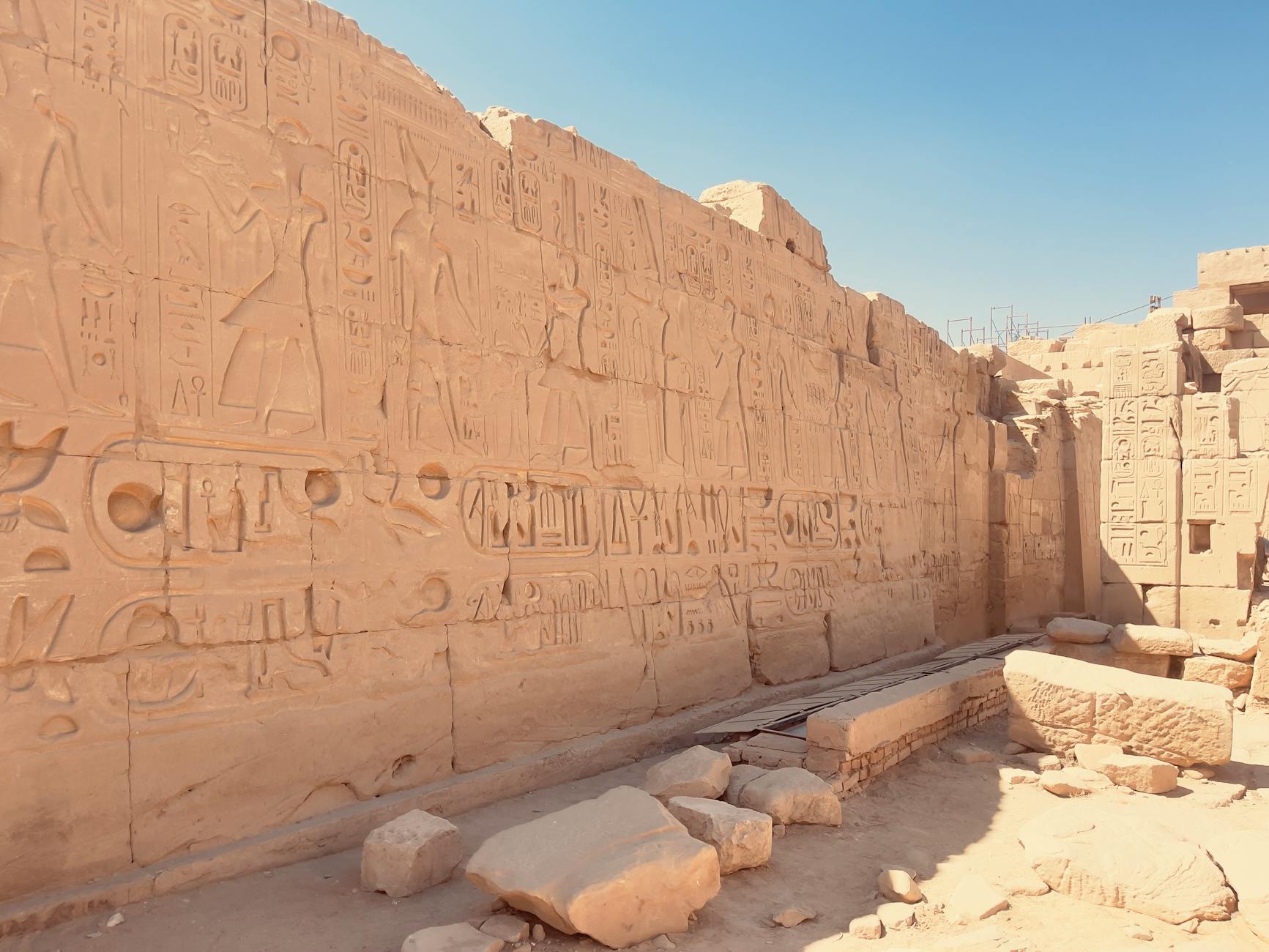
Karnak is the largest religious complex in the ancient world and the correct way to see it is to visit twice: once at 6am on the day you arrive in Luxor, and once at 4pm after you have seen the Valley and Deir el-Bahari and can read the reliefs with context. The 6am visit gets you the hypostyle hall alone. The 4pm visit gets you the sacred lake with west light on the columns.
Entry is 450 EGP each time and it is worth paying twice. The open air museum inside Karnak, tucked to the north of the main axis, holds reconstructed chapels of Senusret I and Hatshepsut and almost nobody visits — it is a separate 100 EGP ticket and it is one of the best-value additions in Luxor. Skip the sound and light show unless you have children who need entertaining; the daytime experience is the real one.
3. The hot air balloon flight
Covered in more detail in the viewpoints post but it earns third place here on its own merits. 1,600-2,200 EGP per person, 45 minutes over the West Bank at dawn, an aerial view of the entire Theban necropolis. Book with Sindbad, Magic Horizon or Hod-Hod Soliman through your hotel and fly on your first morning so you can rebook if wind cancels.
It is not just a novelty flight. The perspective it gives you on the geography of the necropolis — how the temples relate to the flood plain and the hills, how the Valley of the Kings sits behind the mountain from the mortuary temples — changes how you read the sites when you visit them on foot. That is why it ranks so high. Do it early in the trip, not late.
4. Deir el-Bahari and Hatshepsut's temple
Hatshepsut's mortuary temple at Deir el-Bahari is the most architecturally sophisticated ancient building in Egypt. Three terraces set into a limestone cliff, an axial approach that ends at a sanctuary cut into the rock, and the whole thing designed as a single composition with Karnak on the opposite bank as its counterpoint. Entry is 340 EGP and you need 90 minutes minimum.
Go at 8am. By 10 the crowds are heavy and by noon the temperature on the exposed terraces is punishing. The Hathor chapel on the middle terrace and the Punt reliefs are the two things not to miss. The Anubis chapel is skippable — the paint has faded and the queue is out of proportion. The tomb of Senenmut, Hatshepsut's architect, is a short walk away and rarely open, but worth asking about.
5. A Nile felucca at sunset
Sunset on a felucca is the single most touristed activity in Luxor and it is still worth doing. 400-600 EGP for the whole boat for 90 minutes, from 5pm to 6:30pm in winter, going upstream on the wind and drifting back down on the current. The view of Luxor Temple lit by the setting sun and then by its floodlights as you return is postcard Luxor.
Negotiate hard on the Corniche in front of the Winter Palace; the opening price will be triple the real one. Do not book through your hotel — the mark-up is 100-200%. Bring a small snack and a bottle of water. Alcohol is technically fine on private feluccas but discreet. The captains earn their living from tips so 100-200 EGP on top of the agreed price is expected.
6. Medinat Habu
Ramses III's mortuary temple at Medinat Habu is the best-preserved temple on the West Bank and it holds more colour than any other above-ground temple in Egypt. The battle reliefs on the outer walls, the deep-cut hieroglyphs, and the painted ceiling in the second courtyard are all things Karnak has lost and this one has kept.
Entry is 200 EGP and you need 90 minutes. Go at 3pm — the coach groups have moved on and the low sun catches the reliefs on the western walls. Combine with the Ramesseum next door for the best late-afternoon two-hour combination on the West Bank. This is the temple I would send you to if you had time for only one West Bank temple beyond Hatshepsut.
7. Luxor Museum at night
Luxor Museum stays open until 9pm and the granite pieces look completely different under evening lighting. The Amenhotep III statues from the temple cachette, the mummy of Ahmose I, the reconstructed wall from Akhenaten's Karnak temple — all of it displayed with proper spacing and lighting that most museums in the country do not manage. Entry is 300 EGP and you need 90 minutes.
Combine with dinner at Sofra afterwards for the best cultural evening in Luxor. The museum shop actually sells decent books, unlike most site shops. Skip the audio guide. The wall text is sufficient and the audio adds twenty minutes of narration you can find in any guidebook. This is the museum I would tell you to do twice if you have a week — once early in the trip, once at the end.
8. Luxor Temple after dark
Luxor Temple stays open until 9pm and after sunset the floodlighting changes the experience completely. The front pylons and the colonnade of Amenhotep III are dramatic in a way daytime cannot match, and the temple is much less crowded from 6pm onward. Entry is 400 EGP and 90 minutes is enough.
Combined with a walk down the Avenue of Sphinxes to Karnak and back, or a Corniche dinner afterwards, it is the best evening activity in central Luxor. The Roman legionary paintings in the sanctuary, added when the temple was reused as a Roman camp, are worth ten minutes on their own. Bring a light jacket in December and January — the temple opens onto the river and it gets cool after dark.
9. The Valley of the Nobles
The Tombs of the Nobles on the West Bank get a fraction of the visitors of the Valley of the Kings and hold some of the best-painted tombs in Egypt. Sennefer's tomb with the grape vine ceiling, Rekhmire's with the detailed scenes of daily life and foreign tribute, and Ramose with the finely carved reliefs are the three to see.
Combined tickets are 200-400 EGP depending on which tombs you pick and the site is quiet even in peak season. Go at 10am after the Valley of the Kings — you are already on the West Bank and the tombs are five minutes away by car. This is the site that shows you what Egyptian life actually looked like rather than what royal death imagined; the two together are the education.
10. A day at Dendera
Dendera at 70km north makes the top ten because the ceiling of the Hathor temple is unique in Egypt and the site is small enough to see properly in three hours. Covered in the day trips post but it belongs here too — if you have five days in Luxor, one of them should be at Dendera. 900-1,400 EGP for a driver, 200 EGP entry, and an early start.
The Roman mammisi, the crypt with the electric lightbulb reliefs (which are neither electric nor lightbulbs but are the best-known image from the site), and the roof chapels reached by a small internal stair all justify the trip. Combine with Abydos only if you are willing to leave at 5am and get back after dark. As a single-site day, Dendera is the best half-day trip from Luxor.
Before you book
The questions people ask about West Bank, answered with this month’s numbers.
Five full days is the honest minimum for the top ten with time to eat, rest, and repeat one or two. Three days does the top five with sensible pacing. Seven days lets you add Dendera and Abydos as separate excursions and gives you a proper afternoon on a felucca with time for Aswan by train. Under three days and you should focus only on Karnak, Hatshepsut and the Valley.
Balloon at 5:30am, Hatshepsut at 8, Valley of the Kings at 10, lunch on the West Bank at 1, Medinat Habu at 3, ferry back to the East Bank at 5, Luxor Temple at 6, dinner at Sofra at 8. It is a hard day but it works and it hits the essentials. Book the balloon and the driver the day before.
Sound and light shows at Karnak and Philae — the daytime experience is better. The Luxor cruise-market camel photos. The pre-priced tour desk day trips at hotels. The alabaster factory stops that drivers add for commission. The Tutankhamun tomb ticket if you have seen the Cairo pieces. Time saved goes toward a second visit to Karnak or the Nobles' tombs.