A Week of Temples: The Themed Luxor Route for Serious Egyptologists
 Colonnade at the Temple of Horus in Edfu
Seven days, 14 temples, and 400 km of driving — the deep route for travellers who came to Luxor for the reliefs, not the sunset feluccas.
Who This Week Is For
This itinerary assumes you’ve read Wilkinson, Baines, or at least a decent overview of Egyptian religion, and that a full afternoon reading offering-scene reliefs sounds like a good time rather than a slog. It skips balloons, souqs, sunset dinners and pool afternoons. It commits to 5-6 hours per day on-site and covers every major temple within 100 km of Luxor plus Abydos as an overnight extension.
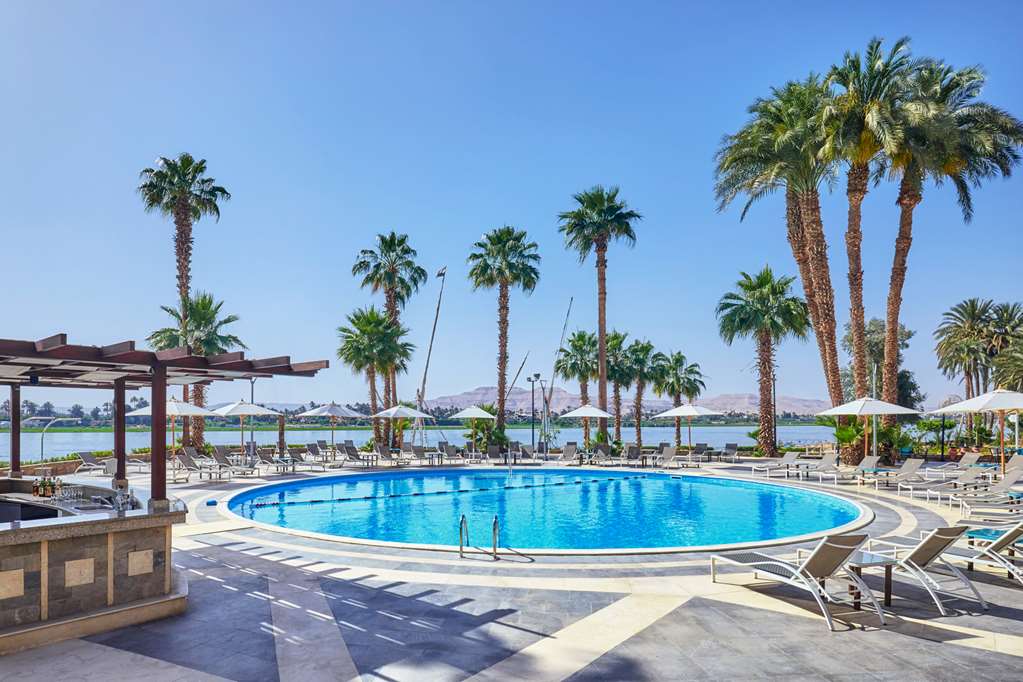
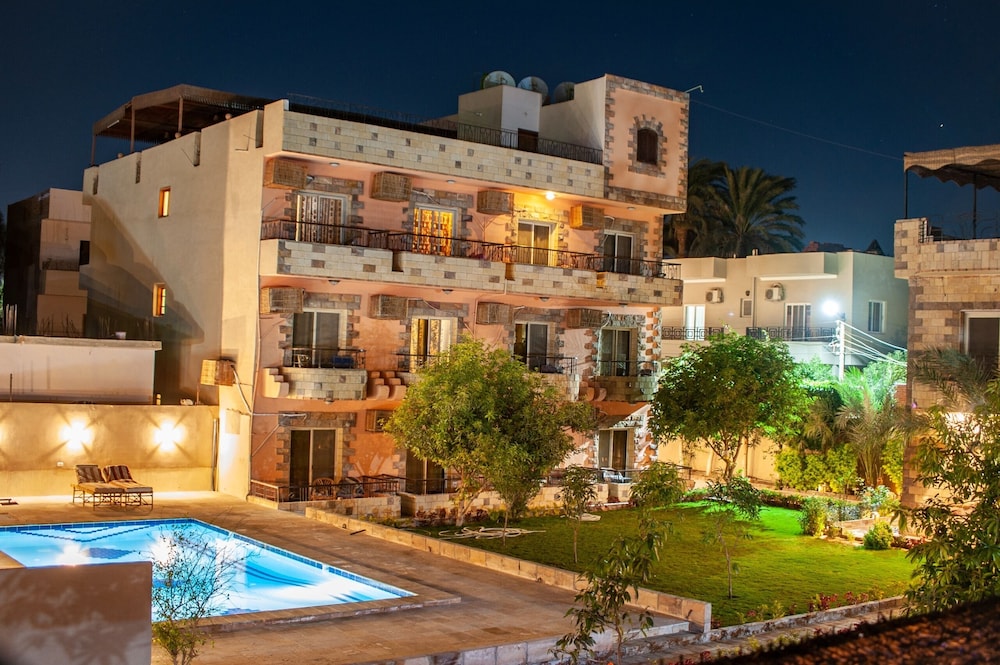
Base yourself East Bank for logistical simplicity — Sofitel Winter Palace if budget allows (5,500 EGP), otherwise Iberotel Luxor (2,200 EGP) which sits directly on the Corniche halfway between the two main downtown temples. Hire a driver for the full 7 days; expect to pay 12,000-15,000 EGP total. The driver becomes essential from day 3 onwards when you leave Luxor city.
Day 1: Karnak, Deep Version
Karnak takes an entire day if you do it properly. Arrive at 08:00 opening. The precinct of Amun-Ra alone is 30 hectares and includes ten separate pylons, the Great Hypostyle Hall, the sacred lake, the festival hall of Tuthmosis III (Akh-Menu), and the open-air museum with reconstructed White Chapel of Senusret I and Red Chapel of Hatshepsut.
Give the open-air museum minimum 2 hours — it's where the finest 12th and 18th Dynasty carving survives, moved indoors to prevent weathering. Lunch on-site at the small cafe (bring your own food better). Afternoon: precinct of Mut to the south (10-minute walk, usually deserted, granite Sekhmet statues everywhere) and the Khonsu temple in the southwest corner. End at the Ptolemaic bark shrine at the Amun precinct's south gate. You’ll leave at closing, 17:00, exhausted.
Day 2: Luxor Temple and Mut Precinct Details
Luxor Temple in the morning for the details Karnak crowds miss: the Amenhotep III colonnade paintings still visible under the roof stubs, the Alexander the Great bark shrine in the sanctuary, and the Roman-era fresco layer showing tetrarchs performing pharaonic ritual. Give it 3 hours instead of the standard 90 minutes.
Afternoon: Luxor Museum for the Karnak cachette statues, the Akhenaten talatat wall, and the Nakhtmin group statue. If you have museum stamina left, add the Mummification Museum. Dinner and an early night — day 3 requires a 05:30 start. Sleep East Bank close to your driver's pickup point.
Day 3: The West Bank Royal Cult Temples
This is the mortuary-temple day. Order: Seti I temple at Qurna (opens 06:00, no crowds ever, one of the finest 19th Dynasty carving programmes in Egypt), then Ramesseum for the fallen Ozymandias colossus and the Battle of Kadesh reliefs on the second pylon, then Medinat Habu for Ramesses III's mortuary temple with its unique historical reliefs of the Sea Peoples' invasion.
Lunch at Africa Restaurant. Afternoon: Deir el-Bahri (Hatshepsut temple) with attention to the Punt expedition reliefs on the middle terrace's south wall — the giraffes, incense trees and Queen of Punt panels are the reason most Egyptologists come. Skip Deir el-Medina today, it needs its own morning. Back to the East Bank by 17:30, dinner, sleep.
Day 4: Deir el-Medina and the Nobles' Tombs
The workmen's village and its tombs are a full morning. Deir el-Medina site entry plus the tombs of Sennedjem (TT1) and Inherkha (TT359) — buy the combined ticket 200 EGP. Sennedjem's tomb has the most vividly preserved 19th Dynasty painted decoration in Egypt, small-format but every centimetre in perfect blue-and-ochre condition.
Afternoon at the Nobles' Tombs on Sheikh Abd el-Qurna hill. Priority: TT52 (Nakht — hunting and banquet scenes), TT69 (Menna — fishing and agriculture panels), TT55 (Ramose — the transition to Amarna art), and TT57 (Khaemhet — offering scenes in sunk relief). Tickets are grouped in pairs, 100-150 EGP each. Give the whole afternoon to these; the crowds go home at 14:00 and the guardians unlock quietly for late visitors with a 50-EGP tip.
Day 5: South to Esna and Edfu
Long driving day. Leave 07:00. Esna's Temple of Khnum by 08:15 — 2 hours minimum, focused on the restored ceiling panels (zodiacs, Nut swallowing the sun, ritual calendar). Lunch in Esna at El-Zahra, Nile fish 150 EGP. Continue south to Edfu, arrive Temple of Horus by 14:00.
Edfu deserves 3 hours. Focus: the enclosure wall's inner face with the mythological reliefs of the contest of Horus and Seth, the pronaos ceiling with astronomical decoration, the mammisi (birth house) adjacent to the main temple, and the nilometer at the temple's western corner. Sleep in Edfu at a small hotel like the Baron Hotel Edfu (900 EGP) — basic but positioned for an early Kom Ombo push tomorrow, or return to Luxor and drive south again next day.
Day 6: Kom Ombo and the Return
If you slept in Edfu, Kom Ombo is 60 km further south — arrive 08:00, give 2.5 hours. The double temple to Sobek and Haroeris is unique for its perfectly mirrored plan and its medical scene relief on the outer wall (surgical instruments, birthing chair, pharmacopeia). The adjacent crocodile museum has 40+ mummified Sobek crocodiles.
Return to Luxor via the same road, 2.5 hours driving. Break at Silsila (Gebel el-Silsila) — the ancient sandstone quarries with rock-cut chapels of Horemheb, Seti I and Ramesses II. Site is often locked; call ahead through your driver for a guardian. Arrive Luxor 15:30, rest afternoon, dinner Al-Sahaby Lane. Sleep East Bank.
Day 7: Abydos or Dendera
Choose one. Abydos is 160 km north, a 2.5-hour drive each way. The Seti I temple has the most complete Osiris myth reliefs of any Egyptian temple plus the famous King List. If you’re serious about Egyptology this is non-negotiable. Site takes 3 hours, driver day cost 2,000 EGP. Add the Ramesses II temple next door for 60 minutes.
Dendera is 60 km north, 90 minutes each way, and holds the best-preserved Ptolemaic temple (Hathor) in Egypt with intact roof, crypts, and the famous Dendera zodiac (a copy — original is in the Louvre). Site takes 3 hours, driver day cost 1,300 EGP. Pick Abydos if you have the stamina; Dendera if day 7 needs to be a shorter day. Fly home the following morning full of hieroglyphs.
Before you book
The questions people ask about East Bank, answered with this month’s numbers.
It's the right length to cover the highlights without exhausting yourself. Ten days would let you add the Theban Tomb network more thoroughly plus overnight Abydos rather than day-tripping. Two weeks would add Aswan and Philae. Seven is the practical sweet spot for one focused trip.
For the depth this itinerary implies, yes — for at least 3 of the 7 days. A licensed Egyptologist guide costs 1,500-2,500 EGP per day. Ask your hotel for one who's published or is affiliated with the Chicago House epigraphic mission. Generic guides recycle scripts; specialists point out actual scholarly detail.
Some yes, with paperwork. The Seti I temple at Qurna, the Ramesseum's inner sanctuaries, and certain Theban Tombs (like TT100 Rekhmire when restoration allows) require applications through the Ministry of Antiquities. Contact them 4-6 weeks ahead through your hotel or a licensed guide. Not casual — but possible for genuine researchers.