Where to stay in Al-Qurna, Luxor
 Al-Qurna village houses beneath the Theban hills near the tombs
Al-Qurna is the West Bank neighbourhood pressed straight up against the Theban hills, with maybe 15 guesthouses and the shortest walk in Luxor to the noble tombs.
What Al-Qurna is
Al-Qurna — sometimes written Gurna, El-Gourna, or Old Qurna — is the belt of village settlement running along the base of the Theban cliffs on the West Bank, from Hatshepsut's temple south past the Ramesseum. Historically the community lived among and on top of the noble tombs, which is why the government relocated much of the old village to New Qurna in the 1940s and again in the 2000s. What remains is a mix of restored mudbrick houses, working farms, and archaeologists' rest houses, sitting almost inside the ancient necropolis.
For a specific type of traveller this is the most atmospheric bed in Egypt. You wake up looking straight at the cliffs where the nobles carved their tombs, walk to Hatshepsut's ramp before it opens, and eat under a lemon tree in a mudbrick courtyard. It suits Egyptologists, repeat visitors, photographers, and anyone whose Luxor is defined by the tombs and reliefs rather than by the Nile itself. It does not suit anyone who wants a restaurant strip, a pool bar, or a five-minute walk to a shop selling anything a tourist recognises.
What accommodation exists here
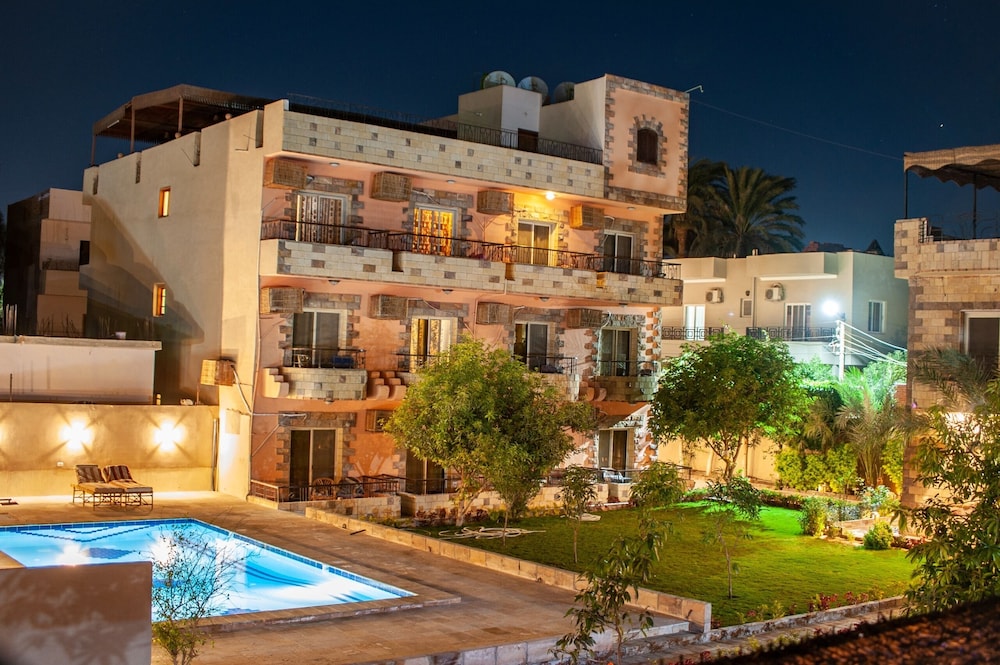
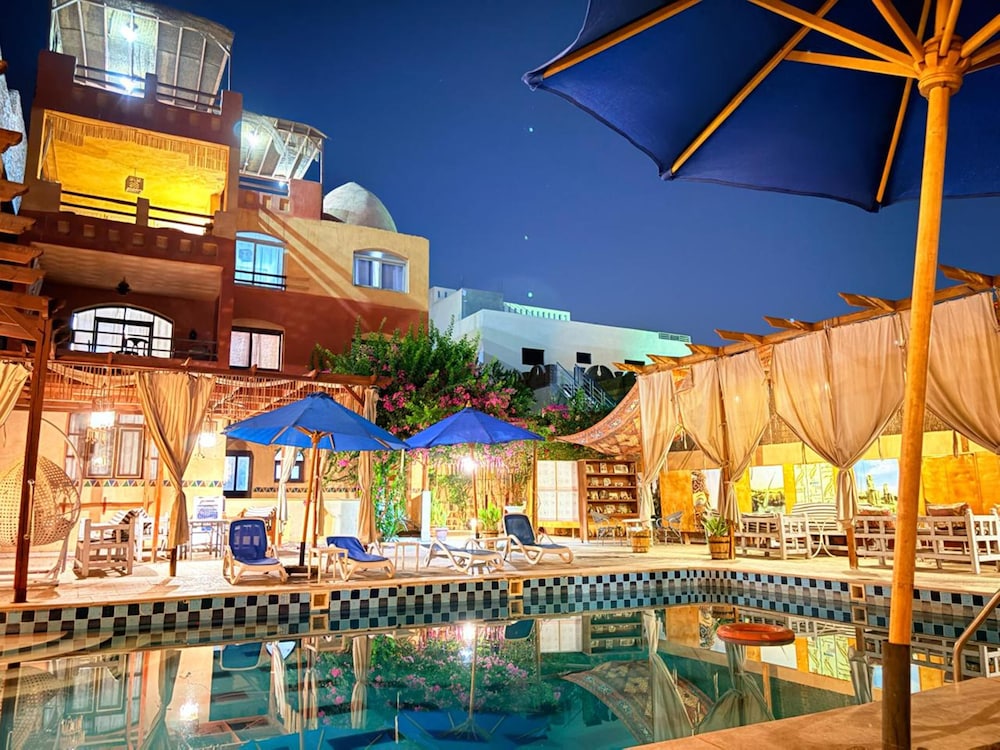
Al-Qurna's accommodation is heritage guesthouses — old rest houses associated with archaeological missions, converted village homes, and one or two mudbrick hotels built explicitly in the traditional style. Marsam Hotel is the reference and the historic anchor: built in the 1920s as a rest house for archaeologists, still operating in that low-key way, doubles around 900-1,300 EGP with breakfast, dinner available, and rooms that look straight at the Ramesseum from the courtyard.
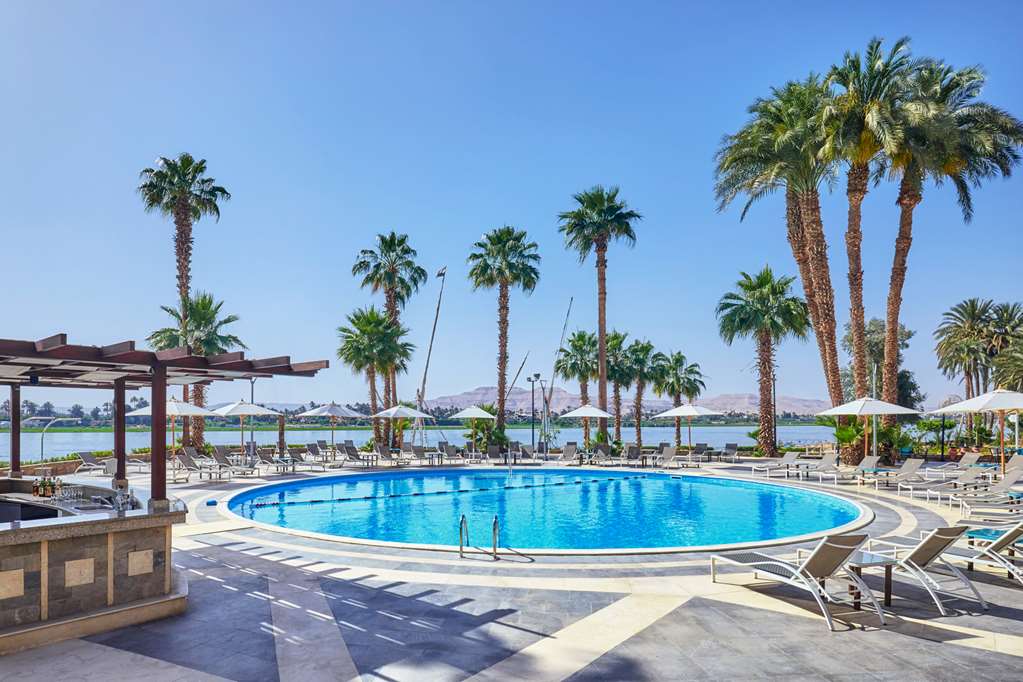
Nour el-Gourna sits at the base of the hills with garden and pool at 1,200-1,700 EGP. Al Baeirat Hotel, technically at the edge of Al-Qurna toward the north, is the larger and more comfortable option at 1,400-1,900 EGP with real AC, real pool and organised transport. Above those, a handful of restored village houses run as private guesthouses at 2,000-3,500 EGP. Below them, a few very basic backpacker rooms at 400-700 EGP with fan only, mostly booked by long-stay budget travellers rather than short-visit tourists.
What is walkable from Al-Qurna
The Ramesseum is 5-15 minutes on foot from most Al-Qurna guesthouses. Deir el-Medina and its noble tombs are 15-25 minutes. Hatshepsut's temple at Deir el-Bahari is 20-35 minutes depending on where in Al-Qurna you sleep. The tombs of the Nobles — Rekhmire, Sennefer, Nakht — are 10-20 minutes, sometimes closer. The Valley of the Kings entrance is 25-40 minutes on foot; walkable if you are an early riser, but a bike or taxi is far more sensible.
This walkability to the archaeological sites is the entire point of sleeping in Al-Qurna, and it is unmatched anywhere else in Luxor. Being able to leave your guesthouse at 5:45am on foot and be at the Ramesseum for opening at 6am, back for breakfast at 8am, and out again to Hatshepsut before the coaches arrive at 9am, is a level of access no East Bank hotel offers at any price. Ferry to the East Bank is 15-25 minutes by taxi or motorbike. Al-Gezira restaurants are 10-15 minutes by taxi.
The three places worth booking here
Marsam Hotel is the historic and atmospheric pick. The rooms are simple — plain white walls, tiled floors, no TV — but the courtyard, the garden, and the location beside the Ramesseum are worth more than most four-star polish elsewhere. Meals are shared and the crowd is Egyptologists, students on digs, and repeat travellers. Book it if you want to feel like you are staying at an active archaeological mission. Doubles around 1,000 EGP with breakfast, dinner 150-200 EGP extra.
Al Baeirat is the practical pick and the one to book if you want the West Bank experience without giving up modern comforts. Working AC in every room, a real pool, gardens with shade, transport arranged without markup, and staff who speak English and know the tombs. Doubles 1,400-1,900 EGP. Nour el-Gourna is the middle ground — garden, small pool, slightly more rustic than Al Baeirat, slightly more comfortable than Marsam, doubles around 1,300-1,600 EGP.
The catch of staying inside the necropolis
Al-Qurna is genuinely rural. There is no restaurant of note within the neighbourhood — you eat at your guesthouse or you take a taxi. Shops sell bread, water, tea, phone credit; nothing else. There is no ATM. The nearest one is at the ferry landing in Al-Gezira. Cash is essential for everything, including your room bill at all but the largest properties. Bring more than you think you need and change money on the East Bank before crossing.
Also: the taxi and tuk-tuk touts. Al-Qurna's guesthouses sit near the tomb sites, so drivers gather here waiting for tourists coming out of the tombs to negotiate rides back. As a guest walking to breakfast, you will get offered a ride to the Valley of the Kings six times before 9am. It is friendly rather than aggressive and a polite "la, shukran" ends every conversation, but it is a feature of the neighbourhood that some travellers find tiring and worth knowing about upfront.
Timing your Al-Qurna stay
November to February is peak, and Marsam and Al Baeirat both fill their good rooms four to eight weeks ahead. Nights are cool enough for a jacket, days are perfect for tomb walks, and the light on the Theban cliffs at sunrise and sunset is the whole reason to be here. If you have flexibility, aim for the last week of January and the first two weeks of February — Coptic Christmas is past, spring hasn’t started, and the good rooms come back into inventory as tour groups cycle out.
March through May the temperatures rise and the crowds thin. June to September is hot enough that Al-Qurna's appeal narrows to the 5:30-9am window; Al Baeirat's pool becomes essential rather than optional, and Marsam's guests genuinely just sit in the courtyard under the lemon trees drinking hibiscus and karkadeh from 11am. If you can handle it, low-season rates drop 30-40% and you have entire tomb sites to yourself in a way you never do in winter.
Al-Qurna or Al-Gezira for your West Bank base
Book Al-Qurna if: the tombs are the reason you came to Luxor, you want to walk out of your guesthouse straight into the necropolis, you have already visited Luxor once and want to go deeper, you are staying five nights or more, or you specifically want the mudbrick heritage-village experience. Book Al-Qurna if you would rather eat at your guesthouse every night than have restaurant choice.
Book Al-Gezira instead if: it is your first West Bank stay, you want a five-minute walk to the ferry and to a restaurant strip, you want choice in dining, or you are combining the West Bank with a lot of East Bank activity. Al-Gezira is the practical West Bank base; Al-Qurna is the specialist one. For most first-timers Al-Gezira wins on convenience, but travellers who commit to Al-Qurna almost never regret it — they just wish they had booked longer.
Before you book
The questions people ask about East Bank, answered with this month’s numbers.
Some are, some are not. Marsam is a purpose-built 1920s rest house in traditional style. Nour el-Gourna is newer construction in the same vernacular. Al Baeirat is a modern low-rise hotel. A handful of private guesthouses are genuinely converted village houses. Ask specifically if the atmosphere matters — the answer varies, and photographs on booking sites do not always tell the truth.
It is 3-4km depending on where in Al-Qurna you start, which is walkable in cool weather but tedious with a bag or in summer. Most guests take a taxi for 40-70 EGP or a tuk-tuk for 30-50 EGP. If you are staying more than three nights, the tuk-tuk drivers at the guesthouse learn your routine and this becomes automatic.
Yes. It is a small close-knit rural community and foreign guests staying at the established guesthouses are known figures within a day. Marsam, Al Baeirat and Nour el-Gourna all have solo female guests routinely. Standard advice applies: modest dress by local standards, walking after 9pm feels quieter than in town simply because the neighbourhood is smaller, not because it is unsafe.
Al Baeirat, Nour el-Gourna and Marsam appear on Booking.com and their own websites. The smaller village guesthouses often only appear on Airbnb or through direct WhatsApp booking with the owner. For the smaller places, email or WhatsApp direct — you get better rates, honest availability, and a name at the front desk who is expecting you when you arrive.