Where to stay in Esna: guesthouses near the Temple of Khnum
 Restored Ottoman-era caravanserai lanes around the Temple of Khnum in Esna
Esna's old town has four decent guesthouses within 200 m of the sunken Temple of Khnum, at 900-1,800 EGP a night.
Why sleep in Esna at all
Most people see Esna in 90 minutes as a Nile cruise stop, walk to the Temple of Khnum, take pictures of the restored ceilings, and reboard. That is a mistake if you care about Ptolemaic-era temples. The ceilings, cleaned between 2018 and 2023 in a joint German-Egyptian project, are the most vividly polychromed in Egypt, and they read differently at opening time when the low sun catches the astronomical scenes, and again at four in the afternoon when overhead light flattens shadow and lets you read the colours. Two visits, six hours apart, cost you one night in the town.
Beyond Khnum, Esna has a partially restored Ottoman-era caravanserai quarter with lanes of merchant houses now hosting workshops and a couple of small museums, and a working Nile lock that gives the corniche a river-port character you do not get in Luxor. It is not a full-day city, but it is a genuine one-night stop that a lot of travellers wrongly skip.
The four guesthouses worth booking
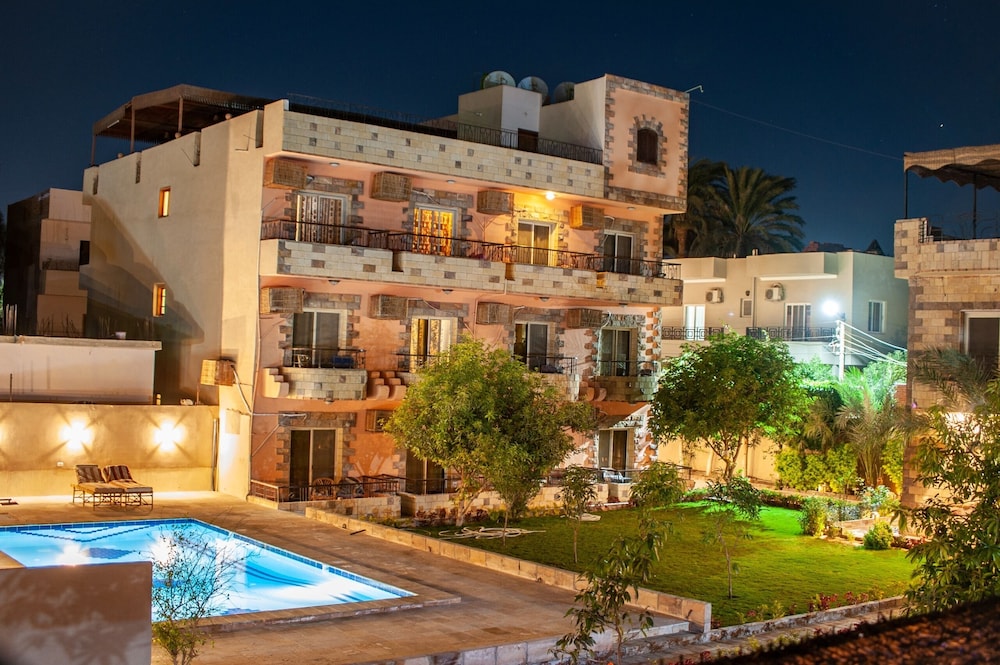
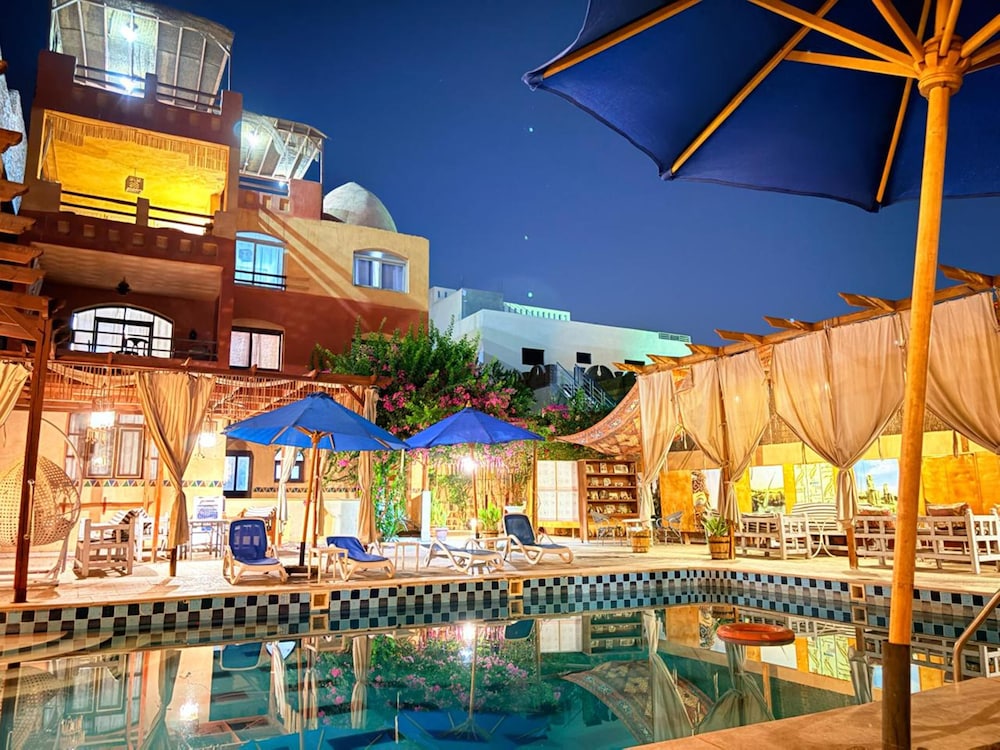
Fekry House, a restored merchant home in the caravanserai quarter, has six rooms at 1,200-1,600 EGP with breakfast, a rooftop overlooking the temple compound, and the best-organised operation in town. Book it first if you can. Beit el-Khan, a smaller place on the same lane, runs 900-1,300 EGP for four rooms; simpler but well kept and the owner cooks dinner on request for 150 EGP. These two are the reason Esna works as an overnight.
On the corniche, the mid-range Esna Nile Hotel offers 25 rooms at 1,400-2,200 EGP with a river view and a reliable if uninspired restaurant. It suits travellers who want a lift, air conditioning that definitely works, and predictable service. The fourth option, an informal homestay near the market at 600-900 EGP, is basic but clean; only book if the other three are full. Beyond these, listings get thin and quality drops off fast.
What a night actually costs
Peak season, October through March, runs 1,200-1,800 EGP for a decent double with breakfast and air conditioning. Summer, May through September, drops to 900-1,400 EGP as demand fades. That is roughly half what an equivalent room costs on the Luxor Corniche, and about 20 percent less than an Al-Gezira guesthouse across the river from Luxor. Dinner adds 120-250 EGP a head at the three restaurants worth eating at.
Extras: temple entry is 200 EGP for foreigners as of early 2026, and worth paying twice if you spread visits across a day. A guide inside the temple costs 200-300 EGP for an hour, which is genuinely useful for reading the ceilings. Felucca hire on the Nile at Esna runs 300-500 EGP an hour, cheaper than in Luxor. Total daily budget including room, temple, food and one felucca hour: 2,000-3,000 EGP a person, versus 3,500-5,000 in Luxor for equivalent standard.
What is walkable
From any of the old-town guesthouses, everything you would come to Esna for is within a 400 m radius. The Temple of Khnum sits at the heart, sunk 9 m below the modern street. The caravanserai lanes wrap around it to the east. The small handicraft museum, showing textile and pottery work from the region, is 100 m north. The main market, active from seven to noon and four to nine, runs along the street north of the temple compound. The corniche and lock are a five-minute walk west.
For anything outside that radius, you need a taxi. The train station is 1.2 km southeast, walkable in 15 minutes with a small bag or 40 EGP by tuk-tuk. The microbus stand for onward travel is at the north edge of town, 20 minutes on foot or 30 EGP by tuk-tuk. There are no formal sights beyond the centre; the surrounding villages are farming country and repay a cycle ride but not a taxi trip.
Who Esna suits and who it does not
Esna suits couples doing a slow Luxor-to-Aswan overland trip who want one small-town night that is not a cruise stop. It suits photographers, Egyptology enthusiasts who care about Ptolemaic-era decoration, and travellers who have already done the Luxor main sites and want a change of pace. It suits solo travellers because the guesthouses are small and social, and dinner tables tend to gather guests together.
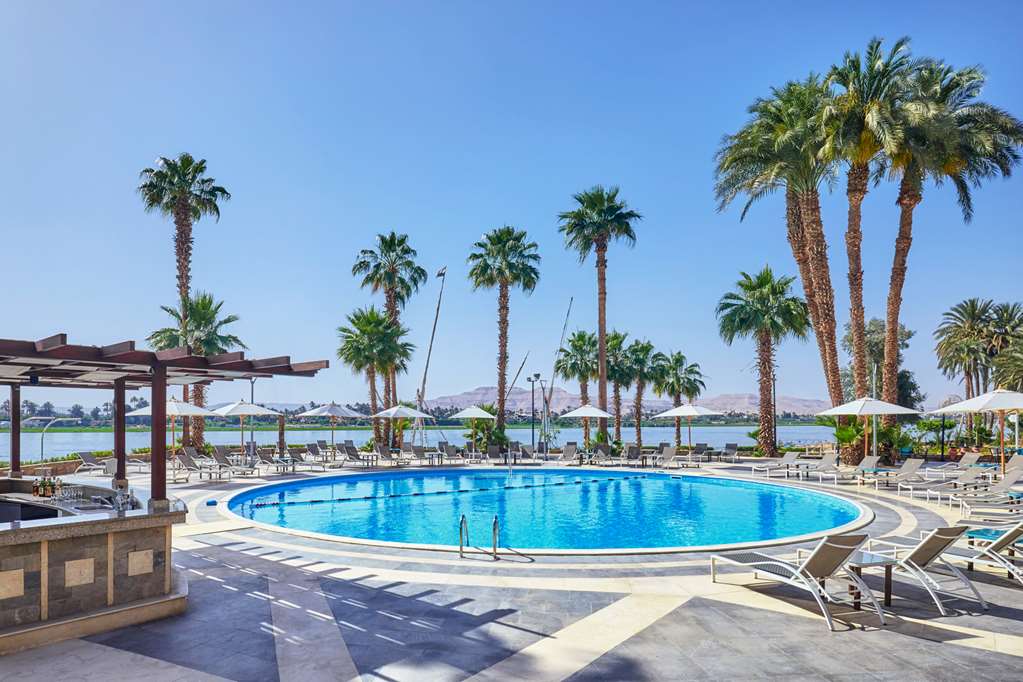
It does not suit families with young children; the guesthouses are not equipped for cots or kid meals. It does not suit anyone who wants a pool, a bar, or dining variety beyond four restaurants. It does not suit travellers on a tight three-night Egypt schedule, where Luxor plus Aswan already fills the time. And it does not suit anyone visiting in July or August, when Esna feels heavy and lifeless in daytime heat that regularly clears 43 C.
Getting to Esna
From Luxor, three options. Train from Luxor station takes 45-60 minutes and costs 25-60 EGP depending on class; four to six services daily. Microbus from the southern terminal in Luxor takes 60-75 minutes and costs 25-35 EGP; runs from about six in the morning until seven at night. Private taxi with driver runs 400-600 EGP one way and takes 45 minutes on the east-bank road. For a couple, taxi is worth the money if you have luggage.
From Aswan, train takes about two hours at 40-90 EGP. From Edfu, 40 km south, microbus is 15-25 EGP and 45 minutes. Nile cruises stop in Esna for the lock and usually allow 90 minutes ashore; some flexible cruise operators can arrange for you to leave the boat here and rejoin later, which is worth asking about if you want to build a night in Esna into a cruise itinerary.
What to skip
Skip the corniche shisha cafes aimed at cruise passengers waiting for the lock; they charge triple and the tea is weak. Skip any offer of a horse-and-carriage tour of Esna; the town is too small to justify it and the horses are often thin. Skip the guesthouses advertising themselves online without at least 30 reviews and photos of the actual rooms; the listings market for small Egyptian towns has real gaps.
Book instead directly through Fekry House or Beit el-Khan, confirm by WhatsApp the day before arrival, ask specifically about hot water and air conditioning, and check whether dinner is available or needs prior notice. Bring cash from Luxor since the ATM situation is limited to one or two machines that are sometimes empty. Bring modest clothing for the market; Esna is quieter and more conservative than Luxor, and the caravanserai quarter is a real residential neighbourhood, not a themed zone.
Before you book
The questions people ask about Esna, answered with this month’s numbers.
In peak season, October through March, yes; two to three weeks ahead is safe for the two best guesthouses, Fekry House and Beit el-Khan. In summer, walk-ins work fine. Direct booking by WhatsApp is more reliable than the international platforms for these small places, and often 10-15 percent cheaper.
Yes for most travellers. Arrive mid-afternoon, see the temple at four, walk the caravanserai at sunset, eat dinner, return to the temple at opening the next morning for the second, different look at the ceilings, then leave by lunchtime. Two nights suits photographers and anyone who wants to explore the wider agricultural area by bike.
Yes, comfortably. Take the early train, spend three hours at the temple and caravanserai, eat lunch on the corniche, and return by late afternoon. Total cost around 300-500 EGP a person plus temple entry. You lose the different light and the evening in the old town, but you save the hotel cost and keep your Luxor base.