Where to stay in Medinat Habu, Luxor
 Medinat Habu temple with mudbrick village houses nearby
Medinat Habu is the quietest genuine village-with-guesthouses on the West Bank, and its four or five real options fill up months ahead in winter.
What Medinat Habu is
Medinat Habu is both a temple — the mortuary complex of Ramesses III, one of the best-preserved and most-underrated on the West Bank — and the small agricultural settlement that has grown up around it. It sits at the southern end of the Theban necropolis strip, about 4km south of the public ferry landing and 3km from the Colossi of Memnon. There is no Corniche here, no shops selling suncream, and no hotel bigger than eight rooms. It is one of the quietest places you can sleep in the whole Luxor area.
The neighbourhood suits travellers who have specifically decided that quiet is the point. Repeat visitors, photographers who want the temple lit at 6:30am and sunset without another person in frame, birdwatchers who want the sugarcane fields at dawn, and anyone escaping a Cairo work week. It does not suit first-timers, people who want to walk to dinner past 9pm, or anyone who has not already done a Nile cruise and a busy East Bank stay. This is the West Bank at its most rural, and the appeal is exactly that.
What accommodation exists
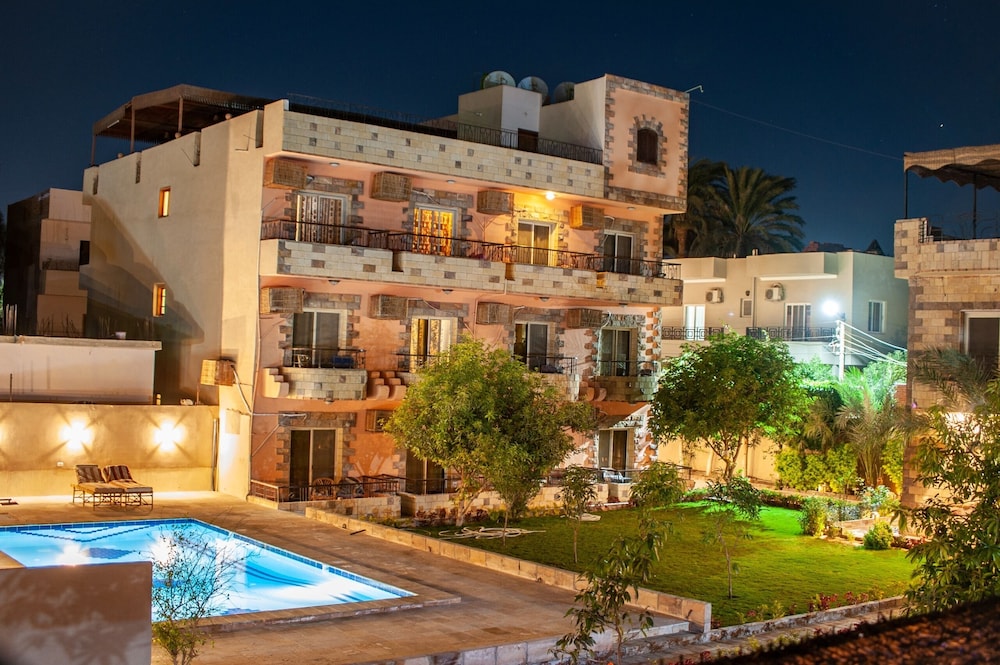
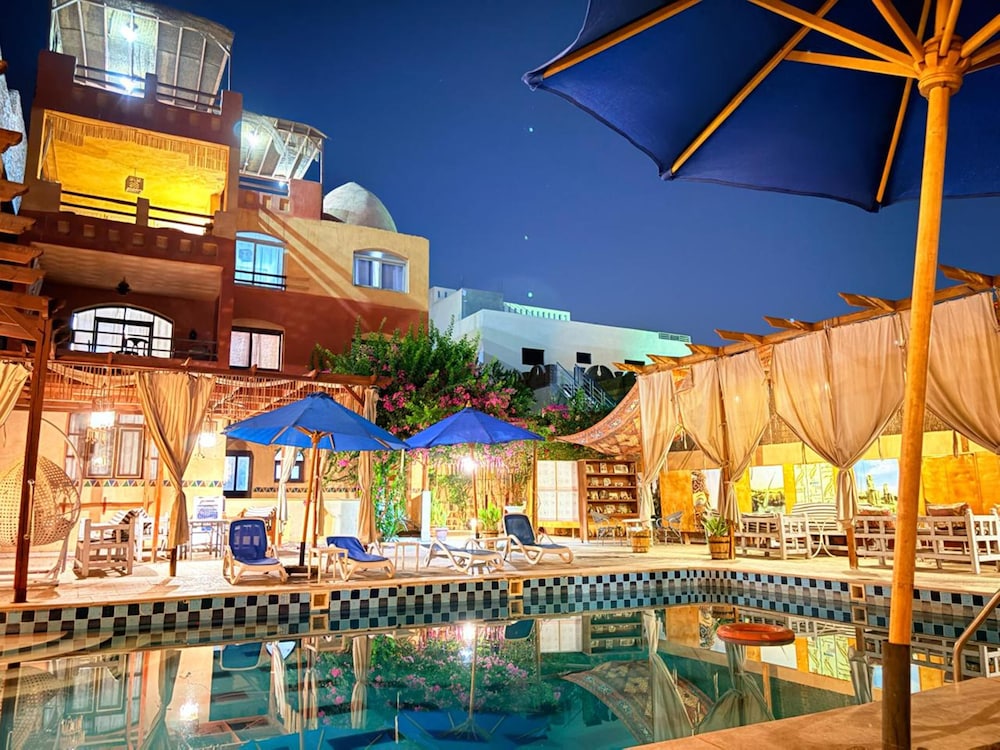
The accommodation here is small guesthouses, most of them family-run, most of them built or rebuilt in traditional Nubian and Upper Egyptian style — mudbrick, domed roofs, painted courtyards, gardens with mango and lemon trees. Beit Sabée is the reference — four rooms in a beautifully restored house, dinner included, roughly 1,600-2,400 EGP for a double with breakfast and dinner. Al Sammy and one or two Airbnb-listed village houses sit at 800-1,400 EGP for a simpler double.
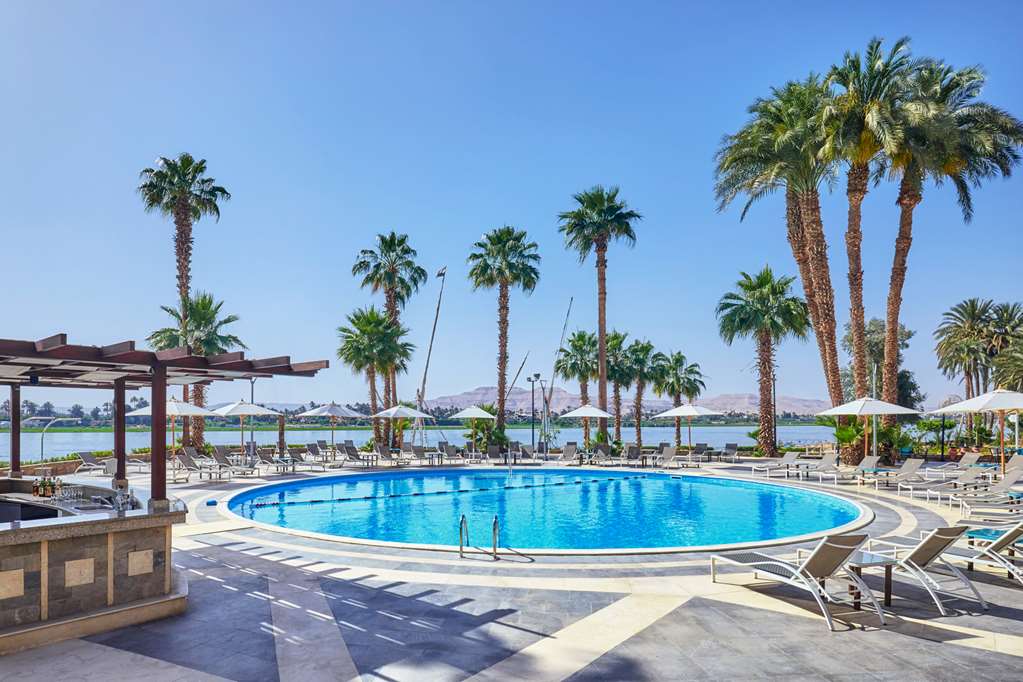
Nour el-Balad, technically slightly north of Medinat Habu proper on the road toward Al-Qurna, is in the same category — 1,200-1,700 EGP, small pool, garden, calm. Farther-flung options like the Djorff Palace suites sit at 3,500-5,000 EGP and give you a design experience closer to a boutique hotel than a village guesthouse. Total real inventory across the area is perhaps 30-40 rooms, which is why winter fills six to eight weeks ahead. Book November-March by mid-October and you will have choice; leave it to a week out and you will have leftovers.
What is walkable from a Medinat Habu base
Medinat Habu temple itself is 5-15 minutes on foot from most guesthouses. Deir el-Medina, the workers' village, is 15-25 minutes on foot depending on which lane you come out onto. The Ramesseum is 20-30 minutes. The Colossi of Memnon are 25-35 minutes. Hatshepsut's temple is 40-50 minutes and honestly too far to walk in warm weather. The Valley of the Queens is 30 minutes on foot uphill. The Valley of the Kings is 6-7km and not walkable.
A bicycle from your guesthouse — 100-150 EGP a day — turns everything except the Valley of the Kings and the ferry landing into a comfortable ride. This is the best base on the West Bank for cyclists specifically, because the roads south of Al-Qurna are quieter and flatter than the northern West Bank. A morning ride to Medinat Habu at opening, back for breakfast, then a bike loop through Deir el-Medina and back for lunch is a perfect West Bank day, and it costs almost nothing.
The two guesthouses worth planning around
Beit Sabée is the correct booking if you have decided this is the West Bank stay you want. Restored village house, four rooms only, meals shared at a long table with other guests and the family. The food is home cooking — molokhia, roast chicken from the village, fresh bread — and dinner is included in the room rate, which matters because there is nowhere else to eat within a 15-minute walk. Book two months ahead for winter and one month ahead for shoulder season.
Nour el-Balad is the secondary choice and works when Beit Sabée is full. Bigger — around a dozen rooms — with a small pool, a more hotel-like breakfast, and a slightly less immersive atmosphere. Still in the same category of village experience, still walking distance to Medinat Habu, still cheap by Luxor standards at around 1,400 EGP. Below those two, the Airbnb inventory is highly variable and requires real due diligence; look for listings with 20+ reviews and specific mention of working AC and hot water.
What is missing here
Restaurants. There is no restaurant strip. Guesthouses feed their guests, and if you are staying at somewhere that does not include dinner, you either arrange dinner in advance, cook in an Airbnb kitchen, or take a taxi north to Al-Gezira or east to the ferry area for 100-150 EGP each way. This is not a place where you decide at 7pm you feel like Italian food.
Also missing: ATMs, English-language services, any tour desk, real pharmacies. The nearest ATM is in Al-Gezira, 15-20 minutes by taxi. Bring cash for your whole stay. Bring any specific medication you need. Bring insect repellent — the sugarcane fields are lovely and produce mosquitoes at dusk. Bring a torch for walks after 9pm, because street lighting is patchy. None of this is hard, but it needs to be planned before you leave your East Bank hotel or your Cairo hotel.
Timing and seasons
November through February is peak. Cool nights, warm days perfect for temple walks, and the guesthouses fill on rolling reservations from repeat visitors. If you want Beit Sabée in January, enquire in October. March is the sweet spot — still cool enough for early walking, prices back to shoulder rates, and the light on Medinat Habu's reliefs at 4pm is exceptional. April into May is warm but manageable, and prices soften.
June through September is hot enough that the appeal of Medinat Habu specifically drops. You cannot really walk the tomb loop after 10am, so the walking-village appeal collapses to a two-hour morning window. Some guesthouses close for August entirely. If you must come in summer, book Beit Sabée or Nour el-Balad specifically for the shade and the pool, plan on 6am starts, and accept 42°C afternoons where you read in the courtyard rather than sightseeing.
Medinat Habu or Al-Gezira for your West Bank stay
Book Medinat Habu if: you have stayed on the West Bank before and want to go deeper, you specifically want to walk to Medinat Habu, Deir el-Medina and the Ramesseum, you are on a photography trip, you are staying five nights or more, or you actively want dinner included so you do not have to think about it. Book Medinat Habu if the point of the trip is silence.
Book Al-Gezira instead if: this is your first West Bank stay, you want a short walk to the ferry and cheap taxis to town, you want a choice of restaurants, or you have three nights and want to make them count. Al-Gezira is the practical West Bank; Medinat Habu is the atmospheric West Bank. Both are valid. Most first-time West Bank stayers will be happier in Al-Gezira and can promise themselves Medinat Habu for the return visit.
Before you book
The questions people ask about East Bank, answered with this month’s numbers.
Easily — most visitors do. It is a standard stop on any West Bank tomb tour and any half-day tuk-tuk or taxi from Al-Gezira will include it if you ask. Staying at Medinat Habu is only really worthwhile if you want to visit the temple at opening or dusk when the coach crowds are gone, or if the village atmosphere itself is the reason for your trip.
Yes, at Beit Sabée, Nour el-Balad and most of the Airbnb properties. Speed is slower than East Bank hotels but adequate for messaging, email and light streaming. If you need reliable video calls for remote work, buy a Vodafone or WE data SIM as backup — mobile coverage across the West Bank is generally better than the guesthouse Wi-Fi.
Taxi, 250-350 EGP, 30-45 minutes. The route is airport road across the ring road, over the bridge south of town, then west and south through the villages. Ask your guesthouse to arrange it before you arrive — they know drivers who know their gate, which matters when your lane has no signage and you land at 11pm.
Not really — it is 6-7km with a climb, no pavement, and no shade for most of the route. A bike does it comfortably in 25-30 minutes. A taxi does it in 10 minutes for 80-120 EGP. If you want to walk somewhere from Medinat Habu, walk to Deir el-Medina and the Ramesseum instead. Save the Valley of the Kings for a vehicle.