Base your choice on where you are going and when. For the Nile crossing, the public ferry runs every few minutes and costs little; a private boat is quicker and more flexible. On land, a taxi or pre-booked car is the norm for the Valley of the Kings and other West Bank sites where walking is impractical. Within the East Bank, walking works for the Corniche, Luxor Temple and the souq. Allow more time than the map suggests for any cross-river movement.
How the two banks shape transport
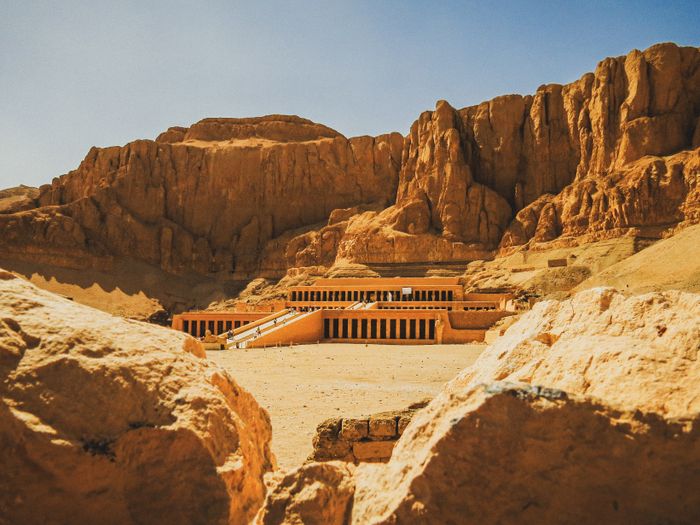
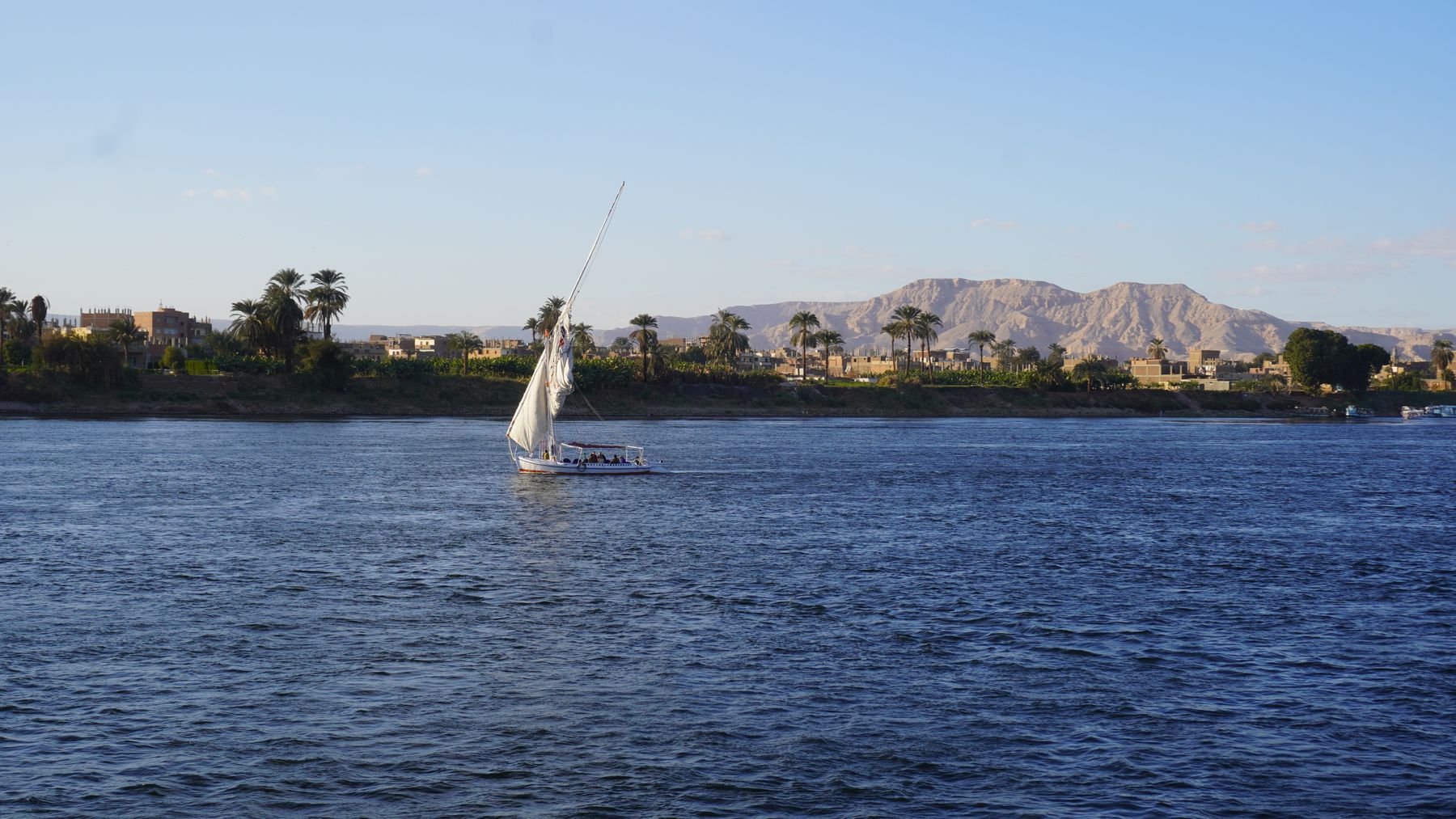
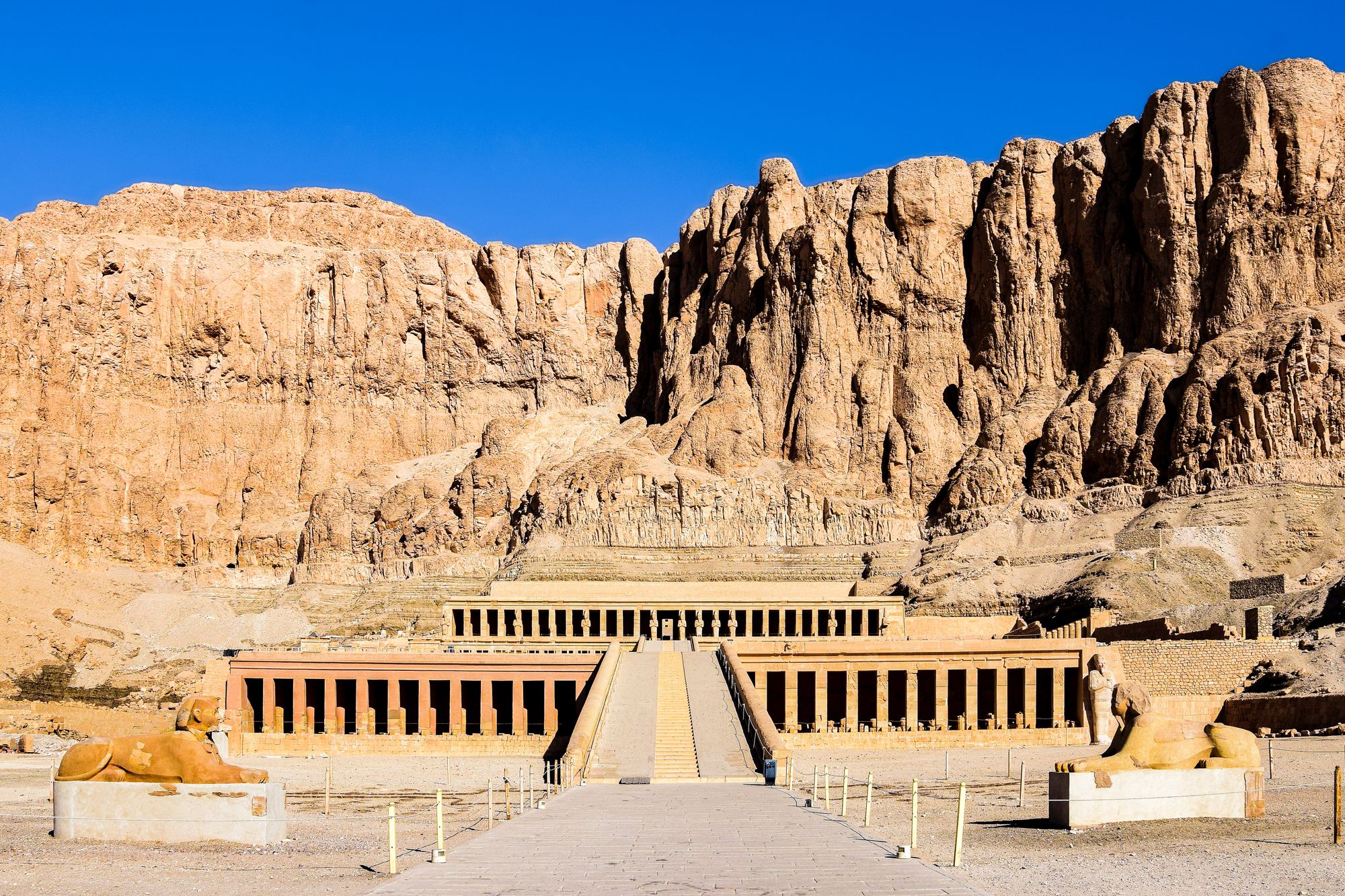
Luxor's transport problem is not distance but the river. The Nile splits the city into two banks that behave differently. The East Bank holds the railway station, most hotels, Luxor Temple, Karnak and the souq, all within a walkable strip along the Corniche. The West Bank holds the Valley of the Kings, the Valley of the Queens, the Mortuary Temple of Hatshepsut and the Colossi of Memnon, scattered across a few kilometres with no continuous pavement. Any crossing of the river adds a step that cannot be walked, because the nearest bridge is far to the north.
This geography explains why the same mode of transport can be sensible on one bank and useless on the other. A bicycle works on the East Bank Corniche but is exposed and slow on the West Bank's open roads. A taxi is unnecessary for the Luxor Temple to Karnak run but essential for the Valley loop. The public ferry is cheap and frequent, yet it lands at a jetty from which the antiquities are still several kilometres away. Decide which bank you are on before you decide how to move.
Comparing the main options
These are the transport modes most visitors weigh against each other, with the conditions that decide between them.
Building a workable plan
Work through these four decisions in order, because each one changes what the next should be.
Three claims to walk away from
Matching the mode to the move
For the crossing itself, the public ferry runs through the day and into the evening, with a frequency that varies by season and demand; check the operator's page or the jetty board for your date, because timings change. It takes foot passengers only. A private boat, hired at the East Bank jetty, crosses when you want and can be arranged for a return, which matters if you plan to stay on the West Bank after the last regular ferry. Neither boat puts you at the tombs: from the West Bank landing you still need road transport.
On land, the West Bank sites are best treated as one loop, because they lie along a single road and doubling back wastes the day. A taxi or pre-booked car with a driver who waits between stops is the usual arrangement, and the cost is normally agreed for the vehicle rather than per person. Within the East Bank, walking covers the Corniche, Luxor Temple, the souq and the approach to Karnak, though the Karnak complex itself is large enough that you will cover a few kilometres inside its walls. Allow more time than the map suggests for any cross-river movement.
The public ferry's timetable is not fixed to the clock. Frequency rises at peak times and falls after dark, and it can stop earlier than visitors expect. Buy your ticket at the jetty rather than on board, keep it for the return if you are coming back the same day, and ask at the jetty what time the last crossing runs on your date.
When the obvious choice fails
The obvious first answer for many visitors is to stay on the West Bank for quiet and cross to the East Bank for the station, restaurants and Luxor Temple. That reverses the usual pattern and can work, but it makes every evening meal and every train a boat ride, and the ferry does not run all night. If your stay is short, or your departure is early, the East Bank is the stronger base. If you have several days and want the tombs at first light, the West Bank can justify itself.
A second obvious answer is to hire a car or driver for the whole day regardless of plan. That suits the West Bank loop, where waiting between sites is the point. It does not suit a day on the East Bank, where the distances are short and the traffic around the Corniche can make a car slower than walking. Match the vehicle to the day, not to the trip as a whole. A single arrangement for everything usually means paying for capacity you will not use.
Questions
How do I cross the Nile in Luxor?+
The public ferry is the usual crossing and runs every few minutes between the East Bank and the West Bank. A private boat can be arranged on demand if you want to cross immediately or land closer to a specific site. The road bridge is south of the city and is mainly useful if you are travelling by vehicle. For the areas either side of the river, see East Bank and West Bank.
Can I walk between Luxor Temple and Karnak?+
Yes, the Avenue of Sphinxes links them and the walk is on the East Bank. It is a long stretch in full sun, so start early or late rather than in the middle of the day. If you want to combine both with other East Bank stops, walking is often quicker than taking a vehicle. The Avenue of Sphinxes is the route to follow.
What is the best way to reach the Valley of the Kings?+
You need a road vehicle from the West Bank, whether that is a taxi, a pre-booked car or a hotel shuttle. The public ferry gets you across the Nile but not to the tombs, so the crossing and the road leg are separate. Grouping the Valley of the Kings with other West Bank stops in one loop saves time. The Valley of the Kings page has the site details.
Is it better to stay on the East Bank or the West Bank?+
The East Bank has the station, the city and most of the restaurants, which makes it simpler if you are moving around a lot. The West Bank puts you closer to the tombs and mortuary temples, which suits early starts. Your choice decides how often you cross the Nile and how much of the day goes to transport. Where to Stay in Luxor compares the two sides in more detail.
Do I need a car in Luxor?+
No. Within the East Bank, walking covers Karnak, Luxor Temple, the Corniche and the souq. For the West Bank sites, a taxi, a pre-booked car or a hotel shuttle is the normal arrangement, and you can hire one for a half day or a full day. Driving yourself adds parking and traffic problems without saving much time. For a wider view of moving around the city, see Getting Around Luxor.