Most first-timer trouble in Luxor comes from treating the two banks as one place. The Nile splits the city: the East Bank has the station, the hotels and the restaurants, the West Bank has the tombs and mortuary temples. Pick one bank to sleep on, leave a full morning for the Valley of the Kings, keep one afternoon free because temple hours and ferry queues move around, and carry small notes for the ferry and for site extras.
Why the river decides your day
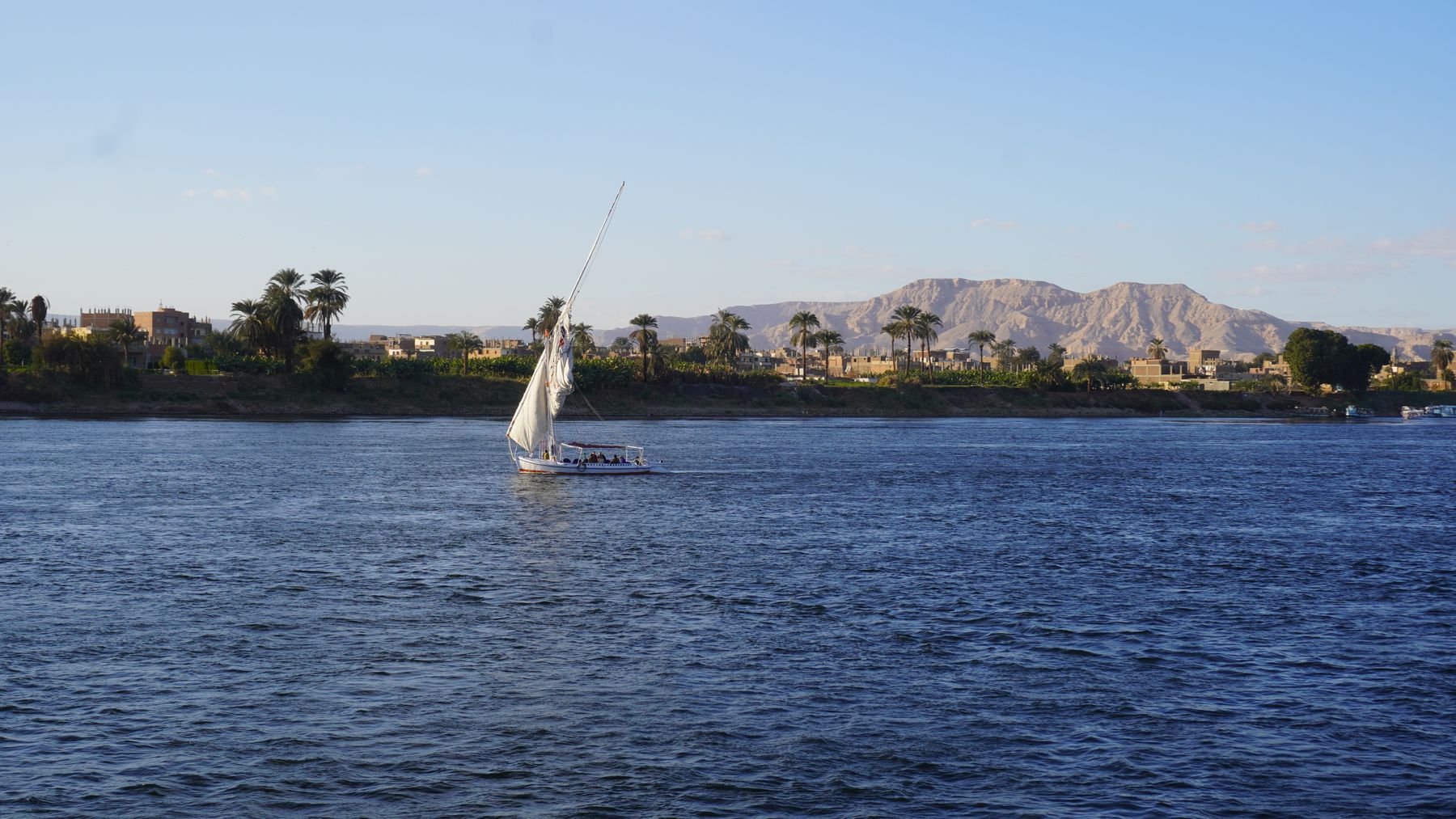
Luxor is two towns that share a name, and the Nile between them is not scenery. Everything a visitor needs on arrival, the railway station, the hotels with the widest choice, the restaurants that stay open late, sits on the East Bank. Everything the visitor came for, the tombs in the hills and the mortuary temples at their feet, sits on the West Bank. The two halves are joined by a ferry, a bridge and a lot of boats, and each crossing costs time in a way that is easy to underestimate when planning from a map.
The practical consequence is that your bank choice shapes every day rather than just your nights. Sleep east and you cross out each morning and back each evening, which suits early temple starts and late dinners. Sleep west and you have the tombs almost on your doorstep but you cross for the station, most eating and most of the town. Neither is wrong. What causes trouble is booking on one bank and planning as though the other is a short walk, because the river only looks narrow from the corniche.
Choosing where to sleep
The bank you book on settles most of the logistics before you arrive.
Planning the visit in order
Work through these before you book anything else.
Three plans that quietly cost you a day
The details that actually matter
Plan the crossings around daylight and around the ferry timetable, which changes with the season and is posted at the landing rather than online. The public ferry runs through the day and into the evening, but services thin out later, and the last crossing back is earlier than most first-timers assume. If you are on the West Bank after dark, the bridge is the reliable route and it is a long way round by road, so build that into the evening rather than discovering it at the landing.
Give the Valley of the Kings a full morning and start it early. Tomb tickets are sold at the site, not at your hotel, and the entry ticket covers a set number of tombs with separate tickets for the special ones. The site opens in the morning and closes in the early afternoon, and hours shift across the year, so check the operator's page for your date. Carry small notes for the ferry and for site extras; the ticket office and the ferry both handle change poorly at busy times.
The public ferry's last crossing moves with the season and is not published in one fixed place. Ask at the landing on your first crossing what time the service ends that week, and treat the answer as the hard limit for your return, not the bridge, which is always open but adds a long detour by road.
When the obvious answer fails
The single night stay is the clearest case. Luxor looks compact and one night looks sufficient, but a single night gives you one morning, and one morning is one site. If the Valley of the Kings is the priority, a one-night stay means arriving, sleeping, and leaving with nothing else seen. Two nights is the shortest stay that lets you see the West Bank properly and still walk the East Bank temples in the evening, and three nights lets you absorb a delayed start without losing the trip.
The balloon flight is the other trap. It is a sunrise flight over the West Bank, so it consumes the morning you would otherwise spend in the tombs, and if the wind cancels it you lose the slot entirely. Treat it as an addition to a West Bank day, not a replacement, and only book it if you have a spare morning. The same logic applies to any add-on that eats the early hours: the tombs reward the earliest start you can manage.
Questions
Should a first timer stay on the East Bank or the West Bank?+
The East Bank suits a first visit because the station, most hotels and most restaurants are there, and Karnak and Luxor Temple are a short ride away. The West Bank is quieter and puts you closer to the tombs, but you cross the river for dinner and for the train. If you are staying three nights or fewer, the East Bank removes a daily crossing from your plan.
Is the public ferry or a private boat better for crossing the Nile?+
The public ferry runs every few minutes through the day and is the simplest crossing for most visitors. A private boat makes sense after dark or when you are moving with a lot of equipment. Neither is complicated; the mistake is planning a day that needs three crossings.
How many days does a first visit to Luxor need?+
Two full days covers one bank per day at an unhurried pace. Three days lets you add a museum, a market or a balloon flight without cutting a site short. One day is possible but means choosing between the temples and the tombs, not seeing both.
Do I need to book tickets or sites in advance?+
Opening hours and ticket arrangements change seasonally, so check the operator's page for your date before you commit to a schedule. Build the day around one fixed site and let the rest move. That way a change in hours costs you a stop, not the whole day.
What should I know about money and tipping before I arrive?+
Small notes are useful for the ferry, for site extras and for tips, and change can be hard to find early in the day. Carry more small denominations than you think you need and keep them in a separate pocket. For what is expected where, read the dedicated page.