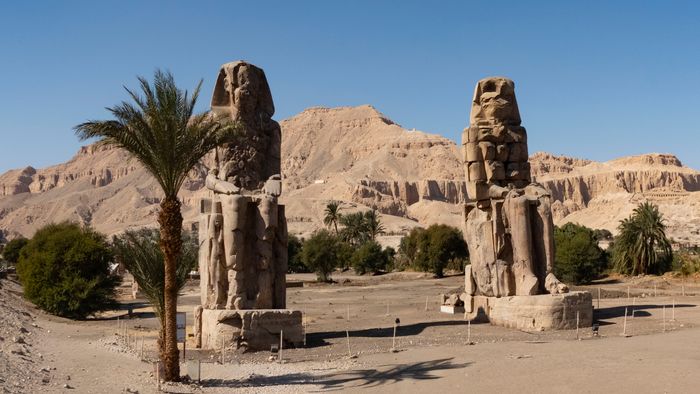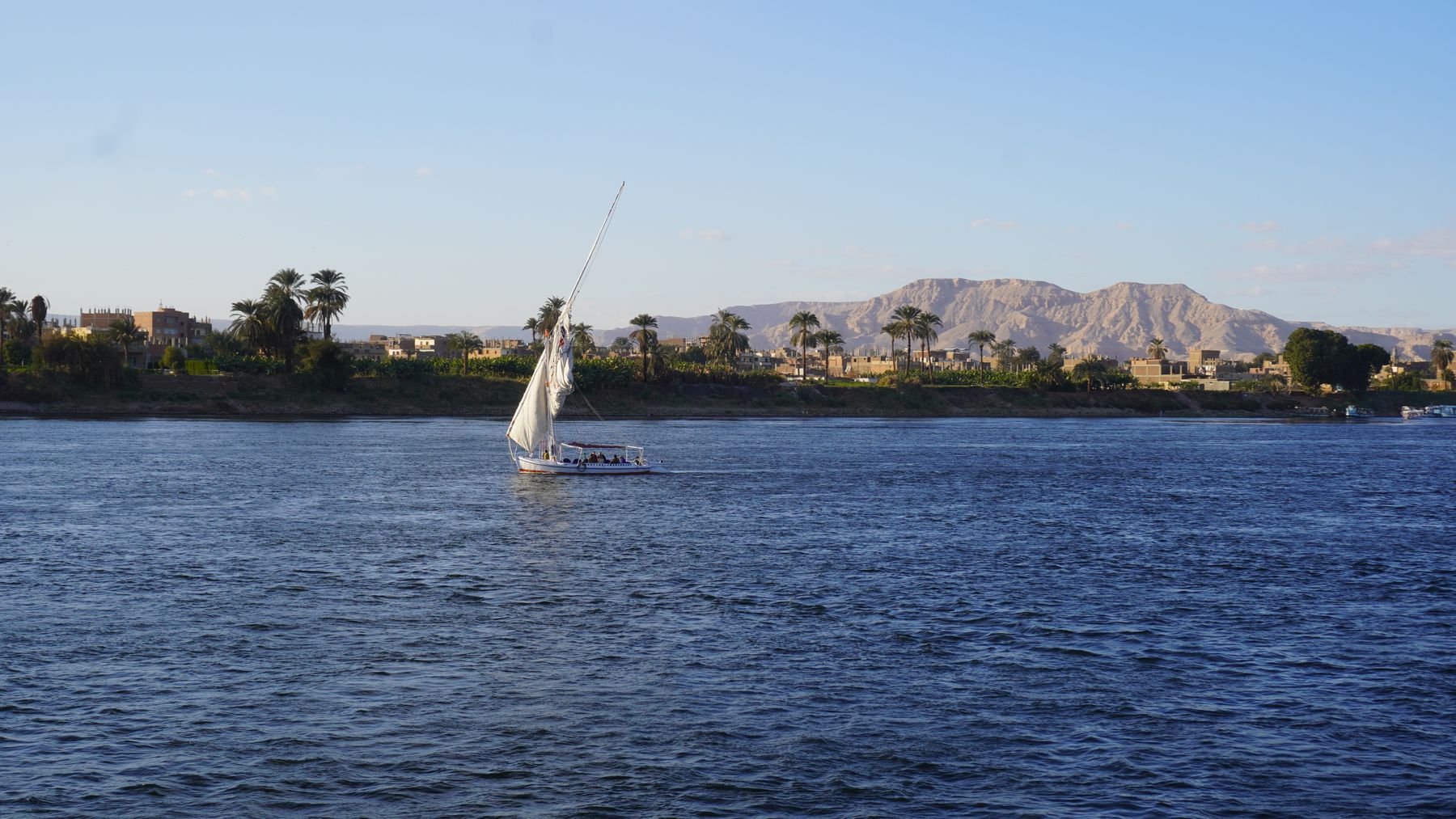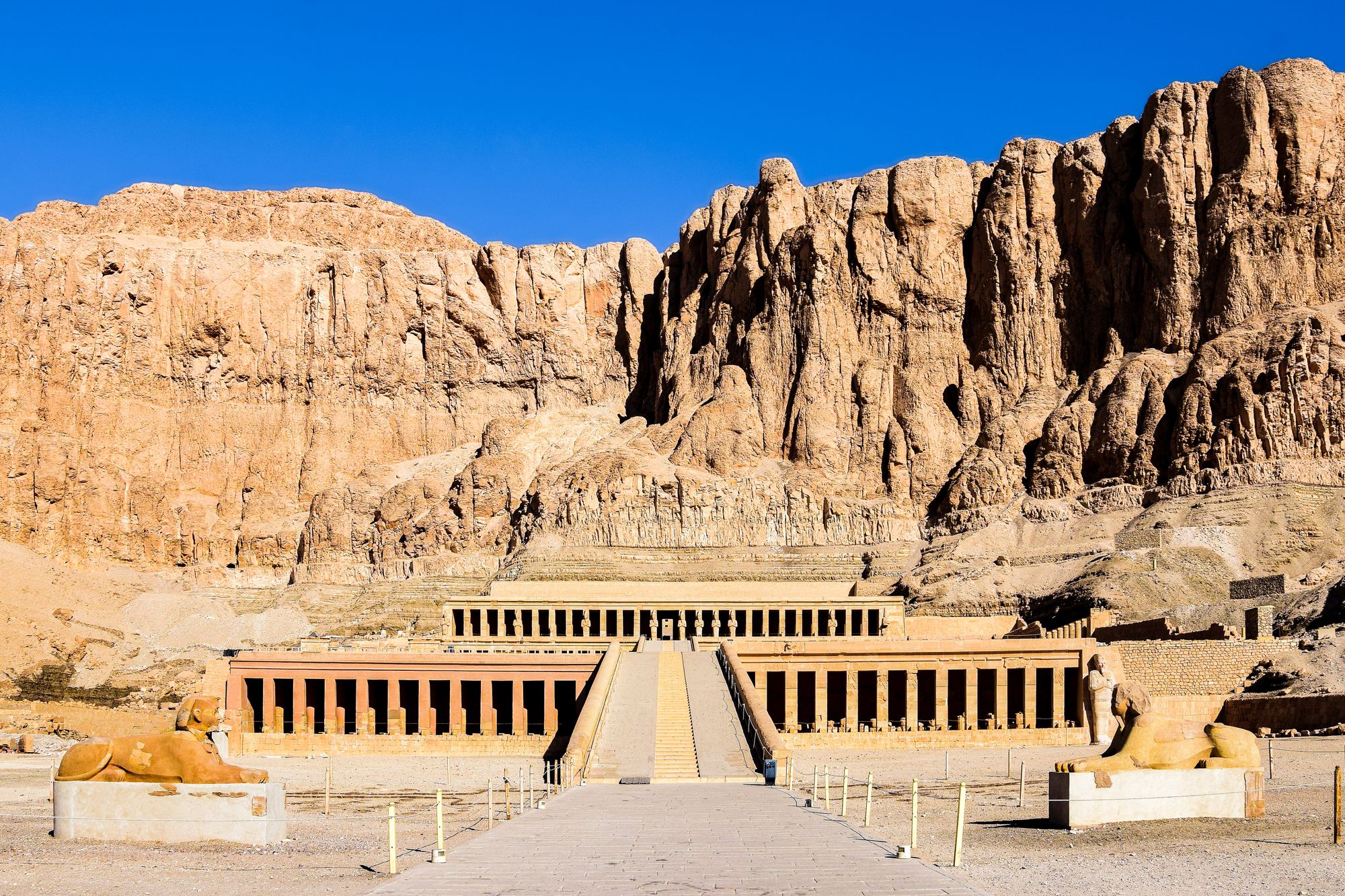
The West Bank is the tomb and mortuary temple side of Luxor: the Valley of the Kings, the Valley of the Queens, Hatshepsut's temple at Deir el-Bahari, Medinet Habu, the Colossi of Memnon, the Ramesseum, the Tombs of the Nobles and Deir el-Medina. It sits opposite the city, station and most restaurants on the East Bank, so you cross the Nile. Plan a full day, start early, and expect walking and sun.
Why the West Bank works this way
The West Bank is where the dead were kept, and the East Bank is where the living stayed. That single fact explains almost everything about a day there. The temples on the west side are mortuary temples, built to serve a king's cult after death, not to be the public heart of a city. The tombs are cut into limestone on the desert edge, deliberately hidden from the river and from the temples. Because burials were meant to stay secret, the sites sit apart from each other across a band of desert, connected by roads rather than by a walkable town. The result is a scatter of separate ticketed sites rather than one continuous ruin.
The Nile crossing adds a second layer of separation. The river kept the two banks distinct in ancient practice and still separates them for transport today. Hotels, the railway station and most restaurants cluster on the east side, close to Luxor Temple and Karnak. The west side has villages, farmland, a few hotels and the antiquities, but no equivalent town centre. So a West Bank day is not a stroll between monuments with cafes in between. It is a route, sequenced by geography and opening hours, with the river at the start and end. Knowing that changes how you pack and how you plan.
Ways to shape a West Bank day
These are the usual combinations, each built around how far apart the sites are and how much walking they involve.
Crossing and getting around
The sequence below covers the crossing and the order that keeps the day manageable.
Three things to walk away from
What to plan before you go
Decide the sites first, because tickets are sold per site and sometimes per tomb. The Valley of the Kings uses one general ticket covering a set number of tombs, with separate tickets for the special tombs that carry their own price and often their own queue. The Valley of the Queens, Medinet Habu, the Ramesseum, Deir el-Medina and the Tombs of the Nobles each have their own arrangements, and some tombs close on rotation for conservation. Opening hours change seasonally, so check the operator's page or the ticket office for your date rather than relying on a guidebook printed years ago. Allow a full day if you want two main sites plus one smaller one.
Transport is the next decision. The public ferry crosses the Nile from near Luxor Temple to the west landing, and a local microbus or taxi continues from there. Many visitors hire a car and driver for the day so the sequence between sites is fixed and shaded. Walking between the main west sites is not practical in heat, because the distances are real and the roadside is exposed. Carry water, a hat and small notes for the ferry and for site extras. Photography rules vary by tomb, and some ban cameras entirely, so check at each entrance before you take anything inside.
Some tombs close on a rotation for conservation, and the rotation changes. A site open on one visit may be shut on the next, so confirm the current list at the ticket office or on the operator's page for your date rather than trusting an old itinerary. Opening hours also shift with the season, including shorter afternoon windows in winter.
When the obvious answer is wrong
The obvious plan is the Valley of the Kings first thing, then everything else. That works on many days, but it fails when a cruise ship or a large tour group has the same idea, which is common in the high season and on days when several ships dock. On those mornings the valley's ticket queue and the walk into the tombs both slow down, and the smaller sites stay quiet. Reversing the order, starting at Medinet Habu or Deir el-Medina and reaching the valley later, can be the better day, though the valley's own last entry time limits how late you can leave it. Check closing times before committing.
A second obvious answer fails for different reasons: doing the West Bank on the same day as Karnak and Luxor Temple. The two banks are close on a map, so the combination looks efficient. In practice the East Bank temples are vast and the West Bank sites are spread out, and trying to cover both means rushing the tombs, which are the part that rewards unhurried attention. If your time in Luxor is short, give the West Bank its own day and keep the East Bank for another. If you have only one day in the city, choose one bank rather than splitting it.
Questions
What is on the West Bank in Luxor?+
It holds the tombs and mortuary temples: the Valley of the Kings, the Valley of the Queens, Hatshepsut's temple at Deir el-Bahari, Medinet Habu, the Ramesseum, the Colossi of Memnon, the Tombs of the Nobles and Deir el-Medina. The villages of Al-Qurna and New Qurna sit among them. The East Bank holds the city, the station and most of the restaurants, so the two sides are different trips.
How do you get to the West Bank from the East Bank?+
The public ferry crosses from the East Bank corniche every few minutes through the day. Private boats cross on demand, and there is a road bridge south of the city if you have a car or driver. The ferry is the usual choice and lands close to the West Bank road.
Can you see the West Bank in one day?+
You can cover the Valley of the Kings, Hatshepsut's temple and one or two smaller sites in a full day if you start early and have transport between them. Trying to add the Valley of the Queens, Medinet Habu and the Tombs of the Nobles as well makes for a rushed day in the heat. Two half days work better if your schedule allows it.
Which West Bank sites are closest to the ferry landing?+
The Colossi of Memnon and Medinet Habu sit nearest the main West Bank road, with the Tombs of the Nobles and Deir el-Medina a short drive inland. The Valley of the Kings and Hatshepsut's temple are further and generally need a vehicle. If you are walking, plan the nearest sites first.
Do you need a guide on the West Bank?+
No, the sites are open to independent visitors and tickets are sold at the gate. A licensed guide adds context at the Valleys and the mortuary temples, but you can see everything on your own. If you want one, book through a hotel or a known operator rather than accepting someone who approaches you at a site.