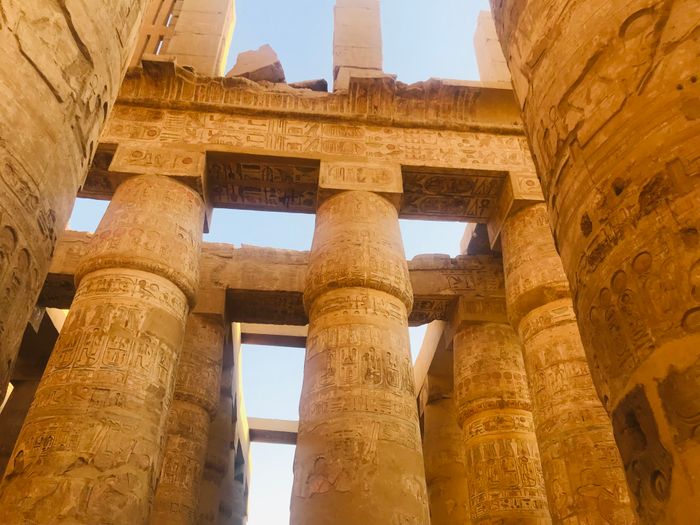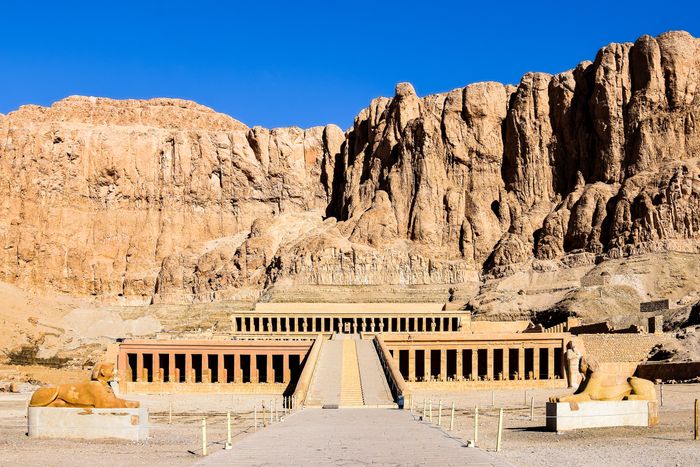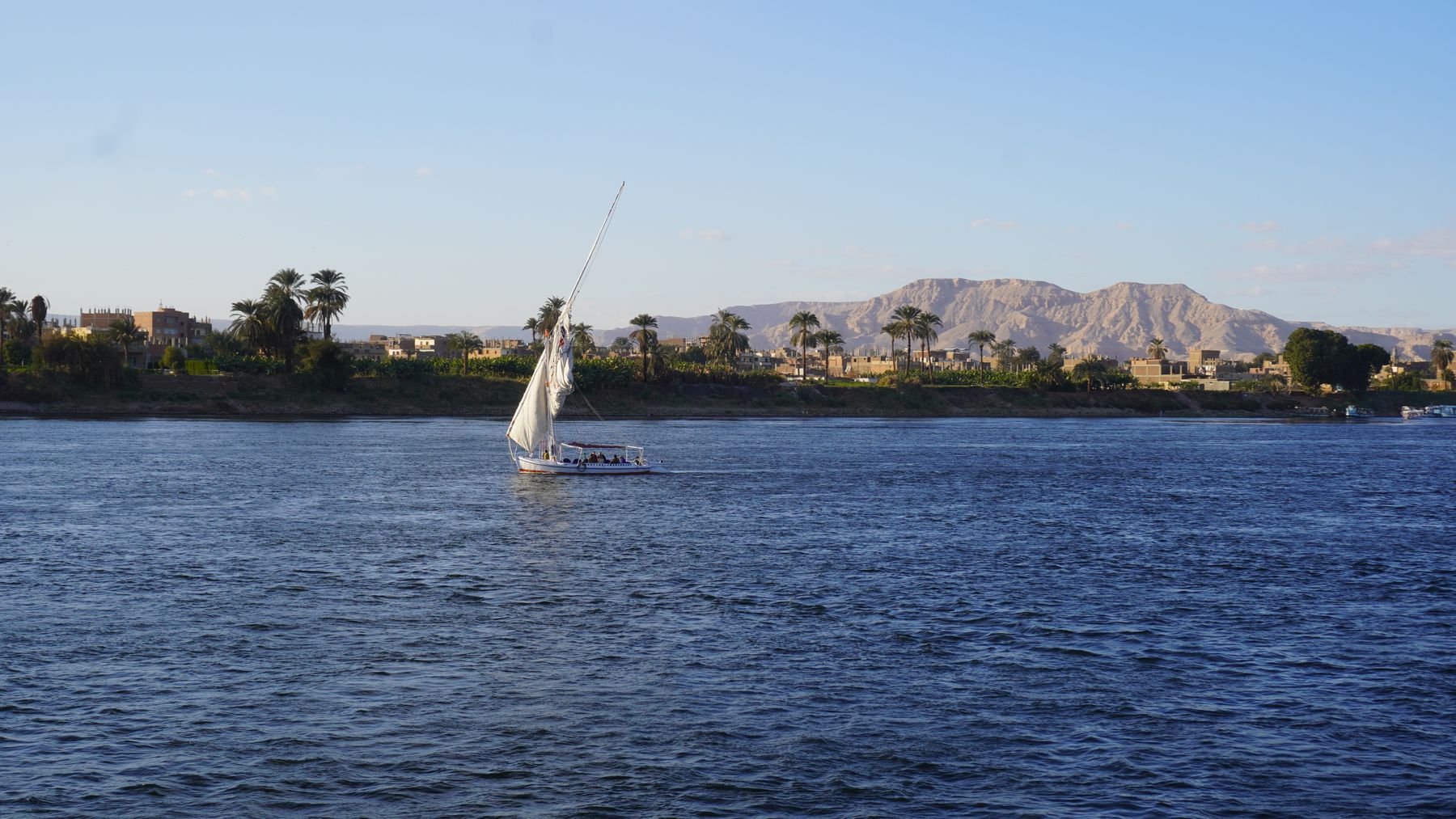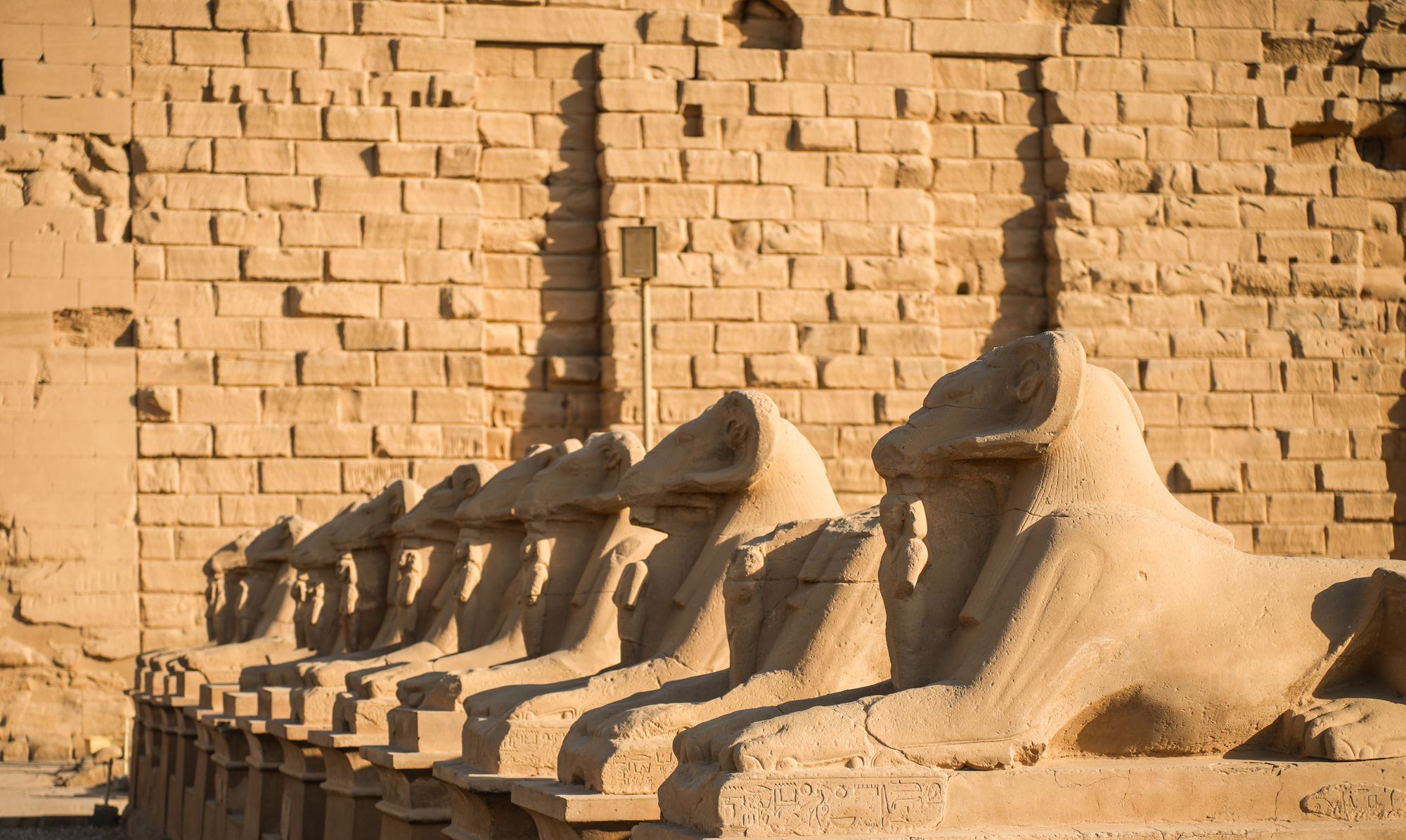
The viewpoint that suits you depends on the hour and the bank. From the East Bank, the Corniche al-Nil and Luxor Temple give the river and the West Bank cliffs at their best around sunset. On the West Bank, the ridgeline above Deir el-Bahari and the paths near Al-Qurna open the whole valley, but they take a climb and daylight. A balloon flight covers the most ground but commits you to an early start and a weather call. For a low-effort view, the ferry crossing itself frames both banks. Check opening hours seasonally, as they change.
Why the light decides the view
Luxor sits in a north-south stretch of the Nile where the sun sets behind the West Bank cliffs. The Theban hills run close to the river and are cut by dry valleys, so from the water and the East Bank corniche the west side reads as a wall of rock that turns gold, then rose, then grey. That is why the phrase best viewpoint has no fixed answer: a terrace that shows the whole valley at noon shows haze and glare, while the same terrace in the last hour of daylight shows the cliffs and the fields separating. Set the hour first, then pick the place that faces the right way at that hour.
The river also works as the divider between two kinds of view. East Bank viewpoints look across at the West Bank. West Bank viewpoints look down into the monuments and out over the fields, and often include the river and the East Bank city in the same frame. Neither is better in the abstract. A view across water flattens distance and hides detail; a view from above the monuments shows their relation to the fields and to each other, and that is the one that explains how the site is laid out. Choose according to whether you want the panorama or the plan.
The viewpoints compared
Each option below suits a different hour, effort level and bank, so match it to the day you have.
How to choose on the day
Work through these in order, because the hour and the bank narrow the choice before the specific spot matters.
Three things to walk away from
What each viewpoint asks of you
The East Bank corniche and the area around Luxor Temple need no climb and no ticket beyond the temple itself. They suit a short stop before or after dinner and work at any hour the river is visible. The trade is that the West Bank is far away, so the cliffs read as a backdrop rather than as terrain. The ferry crossing between the two banks is the cheapest way to see both banks at once, and the light on the water changes the whole crossing; check the ferry's operating hours for your date, as they shift with the season and with demand.
West Bank viewpoints split into two groups. The paths and ridgelines above Deir el-Bahari and around Al-Qurna give the widest valley view but involve loose stone, exposed ground and no shade after mid-morning. Medinet Habu and the field edges give a lower, flatter view that suits shorter walks and late afternoon. Balloon flights cover the most ground but depend on wind and visibility, and the operator decides on the morning whether to fly; ask what happens to a booking if the flight is called off before you commit.
West Bank monuments sell separate tickets, and some ridgeline paths cross ground attached to a site rather than open land, so a viewpoint may sit behind a ticket check. Confirm which ticket covers the ground you plan to walk on, and keep the ticket with you, as inspectors do check along the paths.
When the obvious answer fails
The famous viewpoints fail in three common conditions. In summer heat the unshaded West Bank ridges become unpleasant by mid-morning, and the flat light of the middle of the day removes the shadow that gives the cliffs their shape, so a climb at noon buys heat and haze rather than a view. In heavy haze, common in spring when dust sits in the valley, the long view toward the East Bank disappears and only the near monuments read clearly, which favours Medinet Habu and the field edges over the ridges.
The balloon flight is the wrong choice when the schedule is tight or the weather is unsettled. Flights leave very early, require a transfer and a briefing, and can be cancelled on the morning; a traveller with a flight or a train later that day should not build the plan around one. It is also the wrong choice for anyone who does not want a pre-dawn start, since the point of the flight is the light at first sunrise. A corniche walk and a ferry crossing on the same day cover both banks without either commitment.
Questions
Which Luxor viewpoint is best for a first visit?+
The Corniche al-Nil on the East Bank, because it needs no climb and frames the river, the West Bank cliffs and the city in one sweep. It works at any hour and is close to most of the hotels, the station and the restaurants. Start there, then decide whether you want to go higher on the West Bank. The East Bank overview covers the rest of the ground on that side.
Do I need to cross to the West Bank for the best views?+
The West Bank has the high ground, so the widest views of the valley and the Theban massif are there. The East Bank has the easier views, including the river looking back at the cliffs. If you only have time for one crossing, do it for the cliffs above Deir el-Bahari. The West Bank overview sets out the sites and the logistics.
Is a balloon flight worth it for the view?+
It gives the largest view of any option, covering the river, the fields and the monuments in one sweep. It also commits you to a very early start and depends on wind, so it can be cancelled at short notice. Treat it as a weather-dependent extra rather than the centre of your trip. The balloon page explains what the flight involves and how cancellations are handled.
Where should I go for sunset in Luxor?+
Sunset is the argument for the East Bank, since the light falls on the West Bank cliffs across the water. The Corniche al-Nil and the area around Luxor Temple both face that way. Arrive early, because the good spots fill and the useful light does not last. The sunset spots page ranks the alternatives by bank and by effort.
What should I know before climbing to a West Bank viewpoint?+
The paths above Deir el-Bahari and around Al-Qurna are steep, loose and sometimes unclear, so ask locally which route is open. Go early, carry more water than you think you need, and keep your head and shoulders covered. Do not count on shade or on a shop once you are above the fields. The Al-Qurna page covers the village and the surrounding paths.