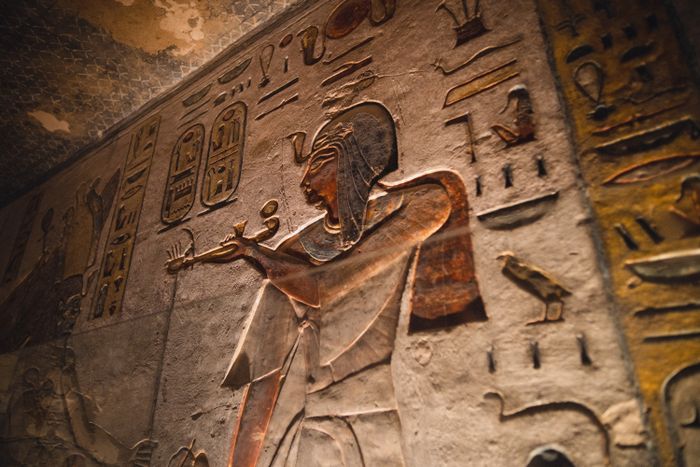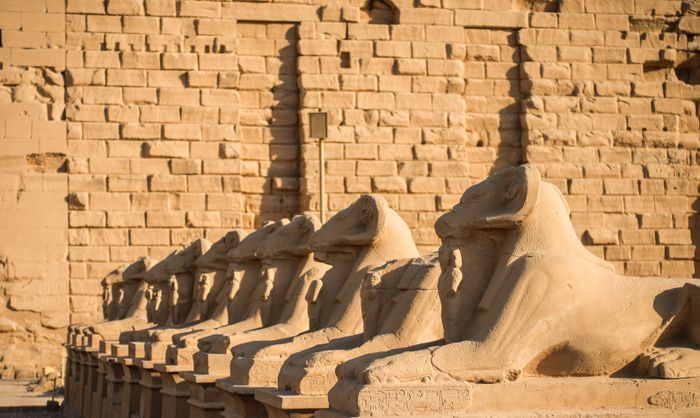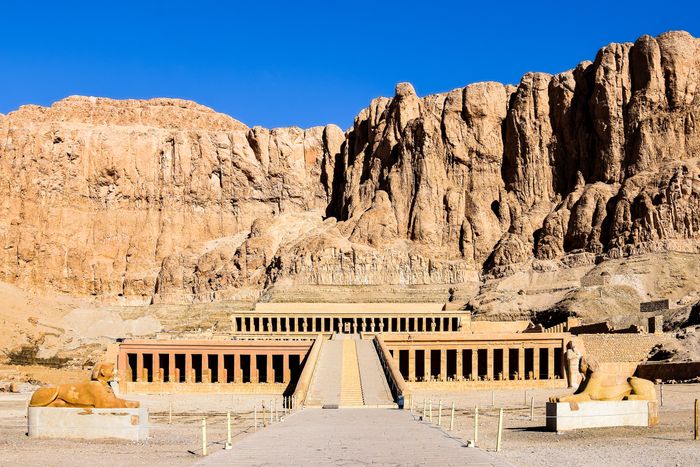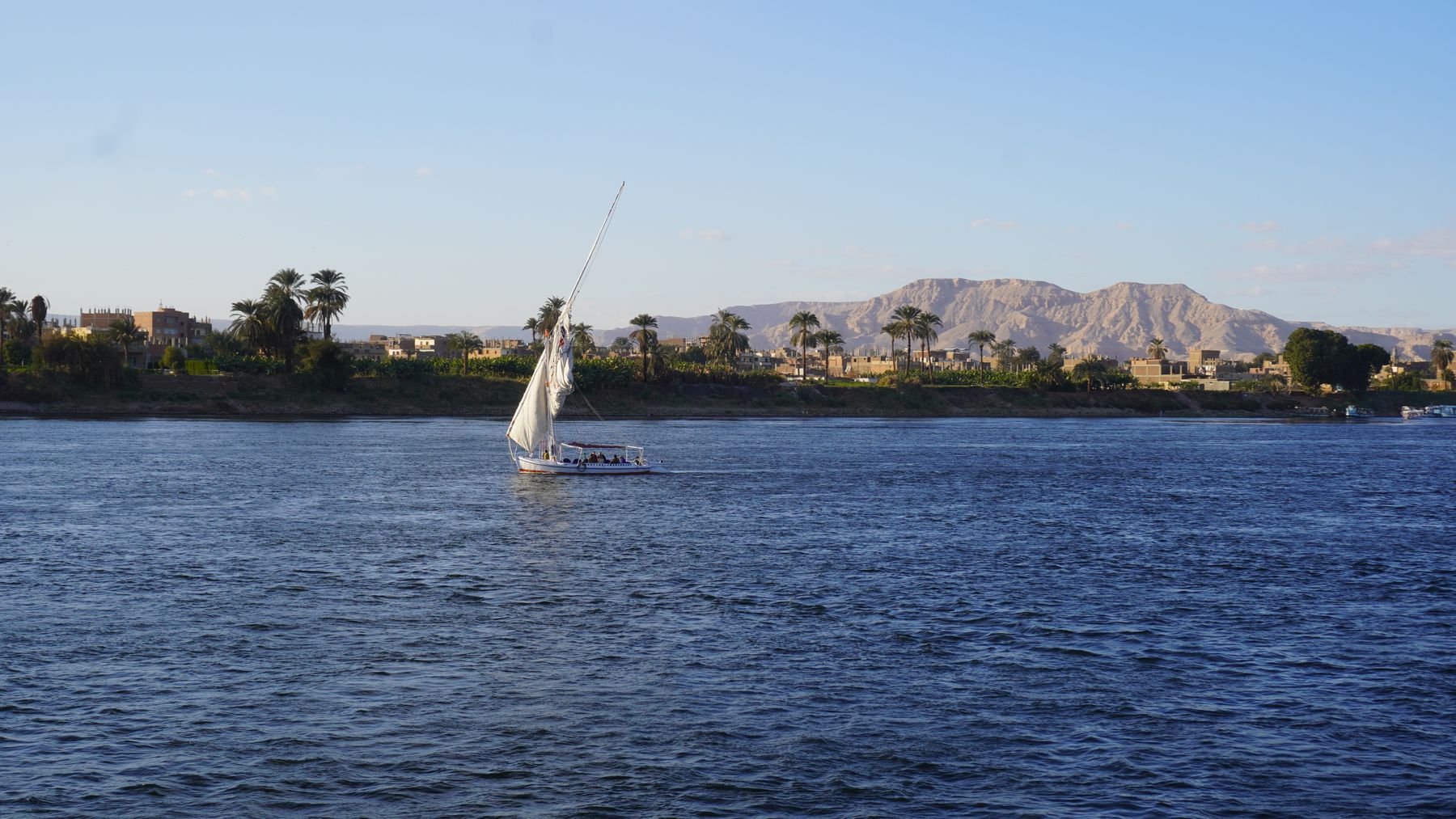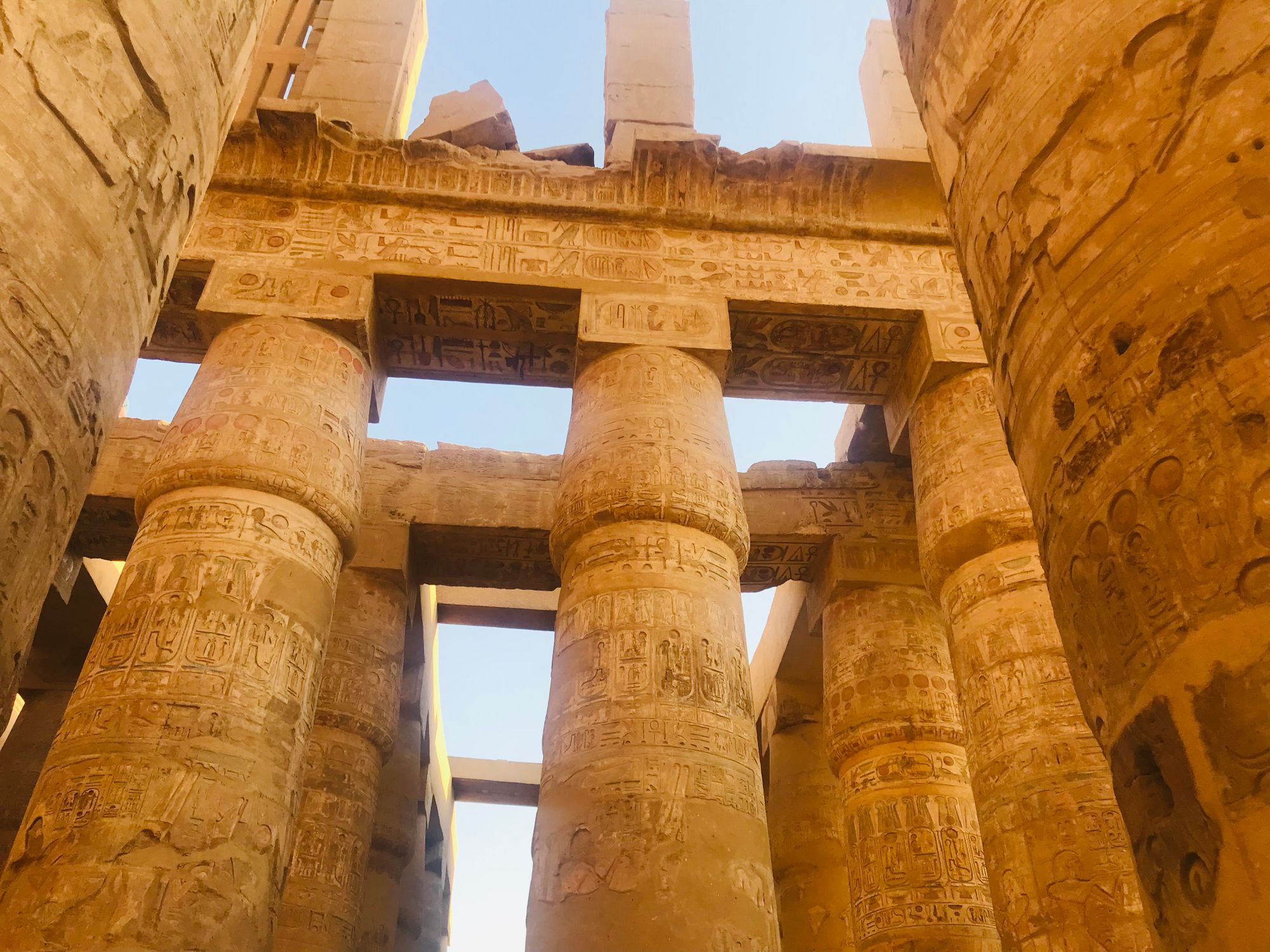
The Corniche al-Nil is the easiest: flat, shaded in parts, and short enough to combine with Luxor Temple. The Karnak approach along the Avenue of Sphinxes is the most rewarding single stretch, because you arrive at the temple on foot. West Bank tomb circuits ask for heat tolerance, firm footwear and a driver between stops. Village walks at Al-Qurna and New Qurna suit half days and slow travel. Distances are what you should plan around, not time.
Why walking shapes a Luxor day
Luxor splits into two banks and the river between them is the real hinge of any walking plan. The East Bank holds Luxor Temple, Karnak, the railway station and most of the hotels, so a day there can be done on foot with no vehicle at all. The West Bank holds the tombs, mortuary temples and the Colossi, spread across open ground with almost no continuous shade and few pavements. That asymmetry is the reason a walk on one side feels effortless and the same distance on the other side does not. On the East Bank, the tightest option for a first trip, because the temples, the station and most of the hotels are on one side of the river.
Distances in Luxor mislead, because heat and surface change what a kilometre costs. A flat corniche stretch in the morning is a different proposition from the same length of dusty track between two West Bank monuments at midday. The Nile also decides your return: bridges are far from the main sites, so a crossing normally means a ferry or a boat, and that shapes where you end a walk rather than where you begin. The most rewarding single stretch is the Avenue of Sphinxes, because you arrive at Karnak on foot.
The six walks compared
Each option below is judged on distance, shade, surface and how easily you can get back.
How to plan the day
Work through these in order and the rest of the day falls into place.
Three things to walk away from
What each route actually asks
Surfaces vary more than maps suggest. The Corniche al-Nil is paved and mostly level, with railings along the water and some shade from trees and buildings. The Avenue of Sphinxes is paved and open, with little cover once you leave the built edge of the city. Al-Qurna and New Qurna sit on dirt lanes and uneven ground, where a stubbed toe is the likeliest mishap. Firm closed shoes matter on all of them; sandals are fine on the corniche and poor on village tracks. Tomb interiors add stairs, low ceilings and confined passages, which are a separate demand from the walking itself.
Plan around distance, not minutes, and treat heat as the variable that decides the day. Morning starts are cooler and quieter at both Karnak and the West Bank sites. Carry more water than you think you need, because refill points on the West Bank are sparse and not always open, and the kiosks near the ticket offices keep unpredictable hours. Work out the return before you set off: on the East Bank you can simply walk back or take a taxi, while on the West Bank you need a driver, a ferry or a boat waiting at a known point. Check current opening hours with the operator for your date.
Bottled water is sold near the main ticket offices and at kiosks along the corniche. On the West Bank the gaps between sellers are longer, so carry enough for the whole circuit rather than relying on a stop midway. Tap water is not recommended for drinking, and refill stations are not dependable, so treat your own supply as the plan.
When the short walk is wrong
A short, flat walk is the wrong choice on a day when you want breadth rather than depth. If the aim is several tombs, a mortuary temple and the Colossi in one outing, the distances between them make walking the weak option; a driver between stops turns a day of marching into a day of looking. The same applies at the hottest part of the year, when the open ground between West Bank monuments offers no relief and a short transfer is simply more sensible than a long, exposed trudge, however close the stops appear on a map.
Equally, do not assume the East Bank can be covered on foot in one go. Luxor Temple to Karnak is a real walk, and adding the souq and the museum to either end stretches it further. The obvious answer, to walk everything because the map looks compact, fails once heat, opening hours and fatigue are counted. Pick one anchor for the day and let the walk serve it. If you have limited mobility, or you are travelling with young children, a vehicle between the main stops is the more practical arrangement.
Questions
Which Luxor walk is easiest?+
The Corniche al-Nil is the simplest: it is flat, follows the river and sits within easy reach of the East Bank hotels and restaurants. It works as a short outing on its own or as the link between Luxor Temple and the city centre. Details of the route and its condition are set out on the corniche walk page.
Can you walk from Luxor Temple to Karnak?+
Yes, and the Avenue of Sphinxes is the line to follow for most of it. It is a single, mostly straightforward stretch rather than a complex route, but it is exposed, so an early start or late afternoon is sensible. The approach and what you pass are covered on the avenue page.
Is it better to walk the East Bank or the West Bank?+
The East Bank is better for an easy, urban walk: the city, the station and most restaurants are there, and the corniche and temple routes are close together. The West Bank is better for monument walking, but the sites are spread out and you need transport between them. Compare the two before committing a day.
How do you cross the Nile on foot for a walk?+
You do not cross on foot. The public ferry takes passengers every few minutes and private boats run on demand, while the road bridge is south of the city. Work out your crossing and return before you start, and the transport page sets out the options.
What should you wear for a Luxor walk?+
Closed shoes with grip, loose clothing that covers shoulders and knees, and a hat. Tomb and temple surfaces are uneven and open routes have little shade, so sun protection matters more than style. For what to expect at the sites themselves, start with the East Bank overview.